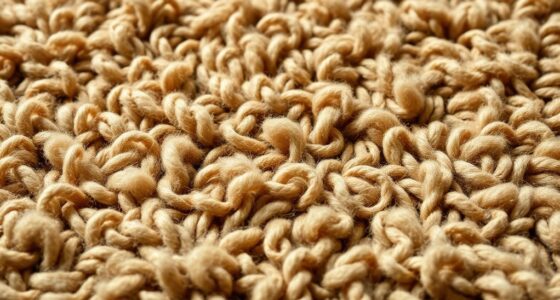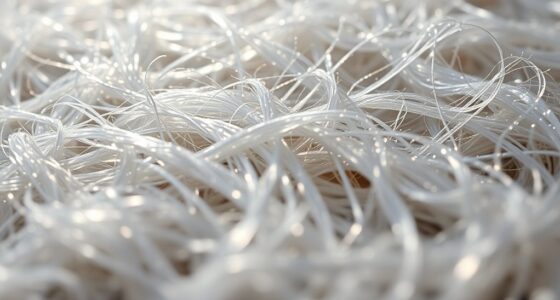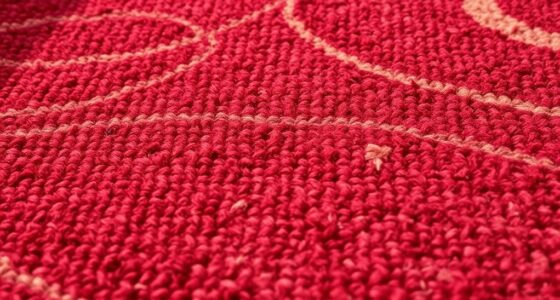
The direction of silk pile in a rug greatly impacts how light interacts with its surface, causing subtle color shifts and luminous effects. When you view the rug from different angles, the pile’s orientation reflects light differently, changing its appearance. This can make colors appear darker or lighter, adding depth and vibrancy. Understanding this effect helps you appreciate how light and pile direction work together, and exploring further reveals how to control these stunning visual variations.
Key Takeaways
- Silk pile direction influences how light reflects off the surface, creating variations in perceived color and shading.
- Changing the viewing angle or lighting conditions alters how light interacts with the silk’s pile, affecting color appearance.
- Pile oriented in different directions reflects light differently, producing darker or lighter shades on the rug.
- Manipulating pile direction during weaving can intentionally create subtle color shifts and visual depth.
- Understanding silk pile orientation helps craft rugs with dynamic, luminous effects and consistent color quality.
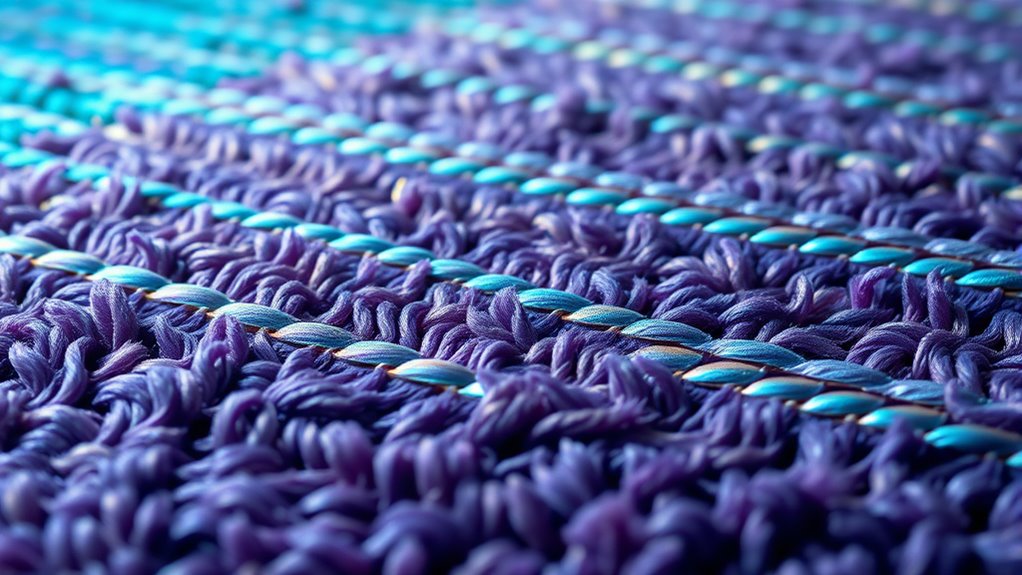
Understanding the direction of silk pile is essential for achieving the desired look and durability in your fabric projects. When working with silk rugs or textiles, recognizing how the pile orientation impacts color shading and overall appearance is crucial. The way the silk fibers are woven influences how light interacts with the surface, creating subtle variations in hue that can dramatically change the visual effect. If you’re aiming for a consistent, uniform appearance, paying close attention to the silk pile direction ensures you don’t end up with uneven shading or unexpected color shifts. Conversely, intentionally manipulating the pile direction can produce beautiful, dynamic effects that add depth and richness to your piece.
In weaving techniques, the orientation of silk fibers within the fabric determines how light reflects off the surface. When you lay the pile in one direction, the fibers catch and reflect light differently than when they face the opposite way. This variance results in a phenomenon known as color shading, where the same fabric displays different shades depending on your viewing angle or the lighting conditions. For example, a rug might appear darker when viewed from one side and lighter from another, simply because the silk pile is directed differently. This effect is often used intentionally by artisans to enhance the texture and visual interest of textile works. Understanding these nuances enables you to better control the final aesthetic of your project.
To master this, you need to pay attention to weaving techniques that influence pile direction. During the weaving process, the tension, the direction in which you weave the silk fibers, and how you finish the edges all impact the pile’s orientation. By consistently maintaining or intentionally varying the weaving direction, you can create desired shading effects or achieve uniformity. This requires precision and awareness, especially when working with delicate silk fibers that can easily shift or become misaligned. A keen eye for how the silk reacts to different weaving methods allows you to harness color shading to your advantage, giving your textile a more sophisticated and nuanced appearance. Lighting conditions also play a significant role in how these variations are perceived, making it important to view your work under different light sources.
Ultimately, understanding silk pile direction helps you control how light interacts with your fabric, enabling you to produce textiles with vibrant, shifting hues or a smooth, consistent color. Whether you’re emphasizing the natural luster of silk or creating a subtle gradation of shades, knowing how to manipulate pile orientation is key. It’s a subtle art that combines technical skill with aesthetic intuition, empowering you to craft textiles that truly stand out. When you pay close attention to weaving techniques and the direction of your silk pile, you unlock a world of possibilities for stunning, luminous textiles.

Amearea Modern Area Rugs for Bedroom Living Room, 4×6 Blue Memory Foam Rug
- Soft and Comfortable Surface: Fluffy low-pile with memory foam layer
- Modern Minimalist Design: Solid color, versatile for home decor
- Non-Slip Bottom: Enhanced grip with non-slip points
As an affiliate, we earn on qualifying purchases.
As an affiliate, we earn on qualifying purchases.
Frequently Asked Questions
How Does Silk Pile Direction Affect Rug Durability?
You’ll find that silk pile direction influences rug durability because fibers aligned in the same direction, with proper fiber density and ideal pile height, resist wear better. When the pile faces the traffic flow, it minimizes fraying and crushing. Conversely, inconsistent pile direction can weaken spots, leading to quicker deterioration. So, pay attention to fiber density and pile height to guarantee your rug stays durable and beautiful over time.
Can Changing the Light Angle Alter the Rug’s Appearance?
Yes, changing the light angle can alter your rug’s appearance. Light reflection shifts as the angle changes, affecting how you perceive its color. When light hits the silk pile differently, it can make certain areas appear brighter or darker, giving the illusion of a color change. To see your rug’s true colors, view it under consistent lighting conditions and avoid direct, changing light angles.
Is Silk Pile Direction Consistent Across Different Rug Brands?
Silk pile direction isn’t always consistent across different rug brands. You might notice slight variations due to fiber consistency and pile alignment, which can influence how light reflects and colors appear. When shopping or evaluating rugs, pay close attention to these details, as different brands may craft their silk piles with unique techniques. Recognizing these subtle differences helps you appreciate how silk pile direction subtly shifts with each piece.
How Should I Clean Rugs With Different Silk Pile Directions?
When cleaning rugs with different silk pile directions, you should adapt your cleaning techniques to match the pile alignment. Always vacuum in the direction of the pile to avoid damage and maintain the rug’s appearance. For deeper cleaning, gently spot clean with a mild solution, ensuring you follow the pile’s flow. This approach preserves the silk’s luster and keeps the rug looking its best, regardless of pile orientation.
Does Silk Pile Direction Impact the Rug’s Resale Value?
Think of your rug’s silk pile direction as the brushstrokes in a masterpiece; it influences its fiber sheen and color consistency. Yes, proper pile orientation can positively impact resale value by maintaining the rug’s visual appeal. When buyers see a rug with consistent color and a beautiful sheen, they perceive quality. Ignoring pile direction risks dullness or uneven fading, which could lower its desirability and value over time.
Conclusion
Now that you understand how silk pile direction gently influences your rug’s colors, you can appreciate its subtle charm. Think of it as a quiet conversation between light and fabric, softly shifting with every glance. With a little awareness, you’ll enjoy your rug’s changing hues, making it even more special. So, embrace these gentle nuances—they add a touch of magic to your space, turning everyday moments into something a little more beautiful.