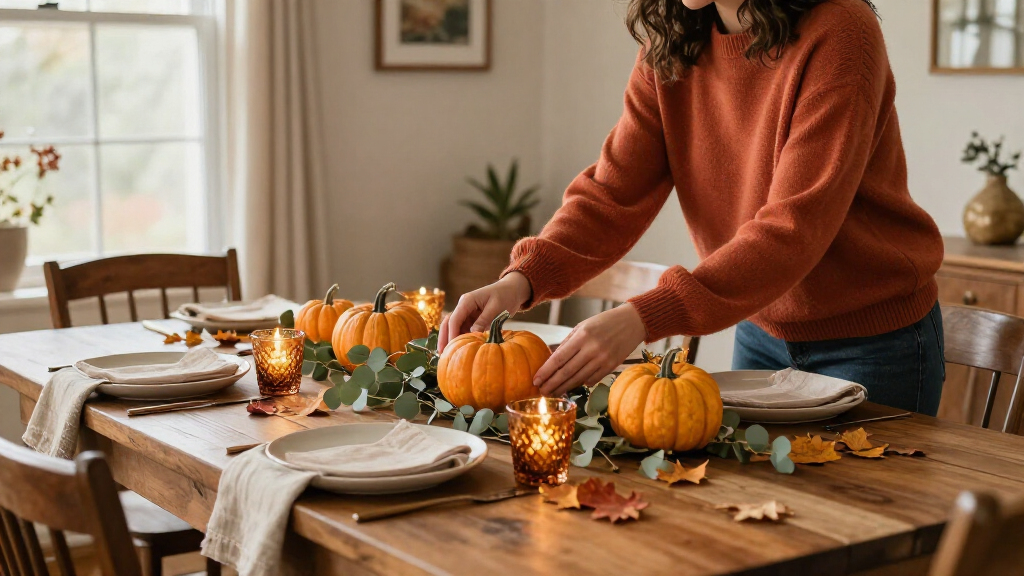

TL;DR
The most effective Thanksgiving table decor ideas pair a restrained autumn palette with layered linens, everyday dishes, and a low centerpiece that leaves room for serving and conversation. Use seasonal produce, foliage, candles or flameless lights, and handwritten place cards to make the table feel personal without buying a matching set.
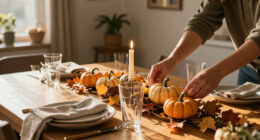
A Thanksgiving table can look festive before the turkey even reaches it: a rust-colored runner, a few glossy apples, and candlelight can turn everyday plates into something guests remember. You do not need a matching dinnerware set or a cart full of new decorations. You need a few choices that work together and still leave room for gravy.

Get furniture and decor delivered free with Prime
- Fast, free delivery on millions of items
- Prime Video, Amazon Music and more included
- Member-only deals all year
This guide walks you through the most important aspects of thanksgiving table decor: picking a style and palette, building a centerpiece that keeps conversation flowing, layering what you own, and adding personal details. You’ll also get practical ideas for small tables, busy households, and decorating on a budget, so the result feels welcoming from the first place setting to the last slice of pie.
Choose one style and repeat a small palette, such as rust, cream, sage, and wood.
Keep centerpieces low and compact so guests can see one another and pass serving dishes.
Refresh everyday plates with linens, texture, and one personal detail instead of buying a matching set.
Use stable candleholders, keep flames away from dried foliage, and choose flameless lights when the table is crowded.
Plan the place settings and serving dishes before adding decorations, especially on a small table.
Choose One Fall Palette That Makes Your Table Feel Pulled Together
Thanksgiving table decor ideas feel cohesive when you choose one style and repeat a small group of colors and materials. A palette such as rust, cream, sage, and warm wood can suit a farmhouse table, while cream, black, and brass give the same autumn foliage a cleaner, modern feel. Repeating a few colors gives the eye a path across the table, so individual objects feel related even if they came from different rooms or years. The palette is like a tune: a few notes repeat, and the whole table sounds intentional.
Popular directions include rustic farmhouse, classic autumn, modern minimalist, traditional, and woodland-inspired. Pick one that fits the room and your everyday dishes. If your plates have a busy blue floral pattern, for example, calm them with a plain linen runner and simple green branches instead of adding several competing prints. This restraint also helps the meal remain the focus; too many patterns and accent colors can make a crowded table feel visually busy before the food arrives.
Try the palette before you shop by laying out a napkin, plate, and one seasonal object. A cream plate beside a sage napkin and a small orange pumpkin already tells a clear story. If something looks out of place, remove it or repeat its color elsewhere; a single bright red ornament can feel accidental, while red apples repeated in a bowl and at two place settings look deliberate. Repeating a color is a low-cost way to make mixed pieces feel chosen, while buying more items to match can add expense and storage without improving the meal.
You can build the look from what is already in your home. A brown paper runner, white plates, and garden greenery can create a natural table for almost no cost. The aim is not perfection; it is a table where each color has a reason to be there and where the visual choices support a comfortable place to eat.
Products Worth Considering

Hisense 75-Inch U7 Mini-LED ULED 4K UHD Smart Google TV (75U7SG)

Dyson Ball Animal 3 Upright Corded Vacuum

Levoit Eleva 300X Air Purifier for Home Bedroom
As an affiliate, we earn on qualifying purchases.
Build a Low Centerpiece That Leaves Room to Pass the Potatoes
Thanksgiving table decor works best when the centerpiece adds seasonal color without blocking faces, food, or serving utensils. Keep the arrangement low enough for guests to see one another across the table, and leave a clear path for platters. Sightlines shape how connected people feel: when a display divides the table, guests have to lean or talk around it. A centerpiece is like the welcome mat at the door: it sets the mood, but it should not make people squeeze past it.
For a six-person meal, try a shallow wooden bowl with three mini pumpkins, a few pears, and short sprigs of greenery. Keep the arrangement compact and place it on a tray so you can lift it away when the turkey and casserole dishes arrive. For a long table, repeat two or three small clusters down the runner rather than building one tall display in the middle. Repeated clusters create a sense of abundance while leaving gaps for serving bowls; a large single arrangement may look dramatic, but it claims the most useful space at once.
Fresh flowers bring soft color, but they need water and a stable vessel. Dried grasses and leaves are easy to prepare early, though they can catch fire, so keep them well away from candle flames. If young children or pets will be near the table, choose stable decorations without small loose pieces and consider flameless candles for a warm glow. These choices trade some spontaneity or fragrance for less upkeep and fewer things that can tip, shed, or become a hazard during a busy meal.
Before guests sit down, set out your serving dishes and check the arrangement from each chair. If a bowl of stuffing has nowhere to land, edit the centerpiece. This practical check reveals whether the arrangement fits the actual meal, not just the empty table. A clear table does more for a relaxed meal than one extra decorative pumpkin.
Layer Linens and Everyday Plates for Instant Table Depth
Layering turns familiar plates into a finished setting by adding a few visible textures: linen, ceramic, glass, wood, or metal. Start with a tablecloth or runner, then add placemats or chargers, dinner plates, napkins, and any place cards. Each layer acts like a frame around the next one, much like a picture mat makes a photograph stand out. The textures add visual depth without requiring new colors, which is useful when you want everyday dishes to feel special while keeping the overall table calm.
You do not need to buy a full new set. Put your everyday white plates on woven placemats, fold a seasonal napkin beside each plate, and add a sprig of rosemary or a small leaf. A glass tumbler and a wooden serving board can bring in shine and warmth without introducing a new color family. The tradeoff is that extra layers take up space and may add cleanup, so choose pieces that are easy to move and wash rather than adding a charger or cloth just for appearance.
For a useful setup, follow this simple order:
- Start with a base. Use a tablecloth, runner, or even a strip of kraft paper that guests can write on. A base gives the settings a common ground and can protect the table, though paper is less durable if spills are likely.
- Add a texture. Place a charger or placemat beneath each plate; keep it easy to wipe if gravy spills. This creates a visual boundary for each guest, but leave enough elbow room so the boundary does not feel cramped.
- Set the essentials. Add plates, cutlery, glasses, and napkins where people can reach them comfortably. Usability matters more than symmetry when guests need room for a drink or an extra side plate.
- Finish with one personal detail. Tuck in a name card, a short menu, or a sprig of thyme. One small accent gives the setting character without making it harder to clear or serve.
Check each place setting with a chair pulled in. If the glass sits at the edge or the napkin slips beneath a plate, adjust it now. The layers should make a setting feel considered while leaving enough room for people to sit, eat, and reach; comfortable settings help decorations feel like part of the meal rather than obstacles.
Add Personal Touches Guests Can Take Home or Remember
Small personal details make a Thanksgiving table feel like it was prepared for the people sitting there. A handwritten place card helps guests find their seats, and a short gratitude prompt gives conversation a gentle starting point. The details can be simple: write names on cream paper, tie each card to a pear with cotton string, or set a small note beside each plate. These touches work because they signal attention to the guests; they do not need to be elaborate to make the meal feel personal.
For example, if relatives who have not seen one another in months are coming, place a card at each setting that asks, “What made you laugh this year?” That question can spark a story before the first course arrives. If your group prefers a quieter meal, a menu card with the dishes and a warm note may feel more natural than a group activity. The right detail depends on the room: an invitation to share can help a gathering start, while a prompt that feels compulsory may make some guests uncomfortable.
You can make the task a family project. Ask children to draw a leaf on each name card or stamp brown paper with potato shapes; imperfect marks often make the table more charming. Keep ink and craft materials away from food, and let the cards dry before setting them down. Planning the activity ahead also avoids last-minute clutter when people are arriving and dishes need space.
Personalization does not require a favor at every place. A shared bowl of wrapped chocolates near the coffee cups or a handwritten menu can be enough. Choose one touch that suits your guests and repeat it neatly; that small bit of care often feels more memorable than elaborate decor because it makes people feel included without giving them another object to manage.
Decorate a Small Table Without Crowding the Meal
A small Thanksgiving table needs decorations that can move quickly when the food arrives. Use one narrow runner, a few compact accents, and place settings that stack or slide easily. On a round table for four, a low bowl of apples can do the work of a large arrangement while leaving the edges free for plates and glasses. The limited surface is shared space: every decorative object competes with a glass, serving dish, or guest’s elbows, so choosing fewer pieces makes the meal easier to navigate.
Start with a table plan before decorating. Set out the plates, cups, and serving dishes you expect to use, then find the remaining space for a centerpiece. If the dishes fill the middle, move the food to a sideboard or kitchen counter and invite guests to serve themselves; that can make a tight dining area feel more generous. This changes the rhythm of serving, since guests may need to stand or pass through the room, but it frees the table for eating and conversation.
Vertical decor can seem like a clever space saver, but tall arrangements often block sightlines and feel awkward at a small table. Instead, create visual interest through texture: a folded linen napkin, a small branch, and a candle in a stable holder. A single repeated detail at each setting looks polished without taking up much room. Low pieces preserve views and are easier to move, though they may make less of a dramatic statement than a tall centerpiece.
For an apartment dinner, a narrow strip of brown paper can serve as both runner and place-card surface. Write each name near a plate and add a few leaf drawings between settings. When dinner ends, you can roll it up with the crumbs and keep the table ready for dessert. It is a practical choice for a casual meal, while a washable cloth may be a better fit if you want a reusable base or expect spills.
Keep Candlelight, Foliage, and Food Safely Apart
Thanksgiving table decor should leave open flames, dried foliage, and loose decorations at a safe distance from food and from anything guests might knock over. Choose stable candleholders, set them on a level surface, and keep greenery away from the flame. If a child, pet, or crowded table makes open candles impractical, flameless candles can provide a similar glow without a live wick. Safety also protects the flow of the meal: when decorations are secure and out of serving paths, guests can reach across the table with less worry.
Dried botanicals are especially easy to style ahead of time: a bundle of wheat beside a bowl of pears can look warm and relaxed. They are also flammable, so do not arrange them around taper candles or leave them near a hot serving dish. Fresh greenery avoids that dry texture but may need water and can shed, so keep it out of the way of plates. The choice is a balance between convenience and upkeep: dried stems hold their shape, while fresh ones may need attention during the day.
Think through the path of the meal. A platter should not brush a candle, and a napkin should not trail into a flame. Before guests arrive, light any candles while you are still in the room and place matches out of children’s reach. A quick check from the seat of each guest helps reveal risks that are easy to miss while standing over the table.
Cleanup matters too. Washable runners, reusable holders, and decorations that can go back in a bowl or storage box reduce the pile of scraps after dinner. If a decoration touches food, move it; seasonal style should never get in the way of serving safely. Choosing pieces that are easy to remove also makes it simpler to clear space as the meal shifts from dinner to dessert.
Frequently Asked Questions
How can I decorate a Thanksgiving table on a budget?
Use your everyday plates and add one seasonal layer, such as a runner made from kraft paper or napkins in a fall color. Apples, pears, garden greenery, and handwritten place cards can make a table feel festive without a new dinnerware set.
What colors work well for Thanksgiving table decor?
Rust, cream, sage, and wood tones make a calm autumn palette, while burgundy and gold can create a richer traditional look. Repeat two or three colors so the linens, produce, and place cards feel connected.
What should I put in the center of the table?
Choose a low bowl of mini pumpkins, pears, apples, and greenery, or repeat small clusters along a runner. Leave clear sightlines and enough space to set down serving dishes; move the centerpiece if the food needs the room.
How do I decorate a small table without crowding it?
Use a narrow runner and one compact centerpiece, then keep the rest of the surface for plates and glasses. If serving bowls do not fit, put them on a sideboard and let guests serve themselves.
Are flameless candles a good choice for Thanksgiving?
Yes. Flameless candles add a warm point of light when children, pets, dried foliage, or a crowded table make open flames awkward. If you use real candles, choose stable holders and keep flames clear of greenery and napkins.
How can I make place settings feel personal?
Write guests’ names on simple cards, tuck in a sprig of rosemary, or add a short menu. For a casual group, a handwritten question such as “What made you laugh this year?” can help conversation start naturally.
Conclusion
Start with a clear palette, layer what you already own, and leave the middle of the table useful for food and conversation. A few apples, a soft linen napkin, and a handwritten name card can feel more welcoming than a crowded centerpiece.
When the candles glow and the serving bowls arrive, your best decoration is the space that lets everyone settle in, reach for seconds, and stay a little longer.