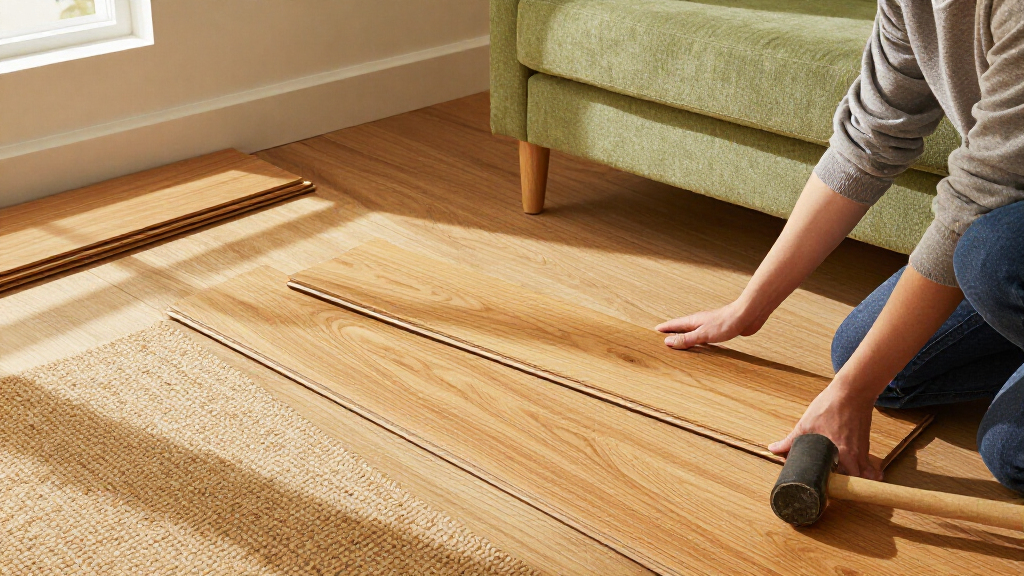

The best engineered wood flooring balances a real-wood look with construction and care requirements that suit your home. My best overall pick is Shaw Exploration Oak Wire-Brushed Engineered Hardwood, whose wider planks and textured finish make it a strong choice for a distinctive, lived-in look. Shaw Empire Oak is a more restrained alternative with narrower five-inch planks, while Ginlodda Multi-Ply Sandy Oak stands out for shoppers drawn to a wider-plank format. The main tradeoffs are appearance, plank dimensions, finish protection, and how much product information is available before purchase. Keep reading for the full breakdown and guidance on matching a floor to your room and installation plan.

Get furniture and decor delivered free with Prime
- Fast, free delivery on millions of items
- Prime Video, Amazon Music and more included
- Member-only deals all year
Complete the kit


Key Takeaways
- Shaw Exploration Oak leads this comparison for buyers who want a wide-plank, wire-brushed appearance; the similar SW713 listing makes checking the exact product identity especially important.
- Shaw Empire Oak offers a narrower five-inch plank look than Exploration Oak, making it a better fit for shoppers who prefer a more traditional visual scale.
- The two Rosewood European oak listings appear closely related by species, finish, and stated coverage, so buyers should compare the exact listing details rather than assume they are separate flooring designs.
- Ginlodda Multi-Ply Sandy Oak differentiates itself with a 7.5-inch plank format, but its construction description alone does not answer questions about wear-layer thickness or installation compatibility.
- Bruce Natural Statement Maple is the clearest choice for a narrower, natural-maple look; its stated 22-square-foot case coverage also makes careful quantity planning important.
| European Oak Engineered Hardwood Flooring, Rosewood Finish, 26.24 sq. ft. |  | Best for Character-Rich Traditional Rooms | Material: Engineered European oak | Finish and color: Rosewood; brown | Surface: Handscraped | VIEW LATEST PRICE | See Our Full Breakdown |
| Shaw Exploration Oak Wire-Brushed Engineered Hardwood Flooring, 6-3/8-Inch Wide |  | Best for Installation Flexibility | Construction: 3-ply engineered oak | Plank thickness: 3/8 inch | Face thickness: 1.2 mm | VIEW LATEST PRICE | See Our Full Breakdown |
| Shaw Empire Oak Wire-Brushed Engineered Hardwood Flooring, 5-Inch Planks |  | Best for a Thicker Plank Build | Wood species: White oak | Plank thickness: 1/2 inch | Face thickness: 1.2 mm | VIEW LATEST PRICE | See Our Full Breakdown |
| Shaw SW583 Empire Oak 5″ Wide Wire Brushed Engineered Hardwood Flooring with Scuff Resistant Finish |  | Best for Radiant-Heat Projects | Wood species: White oak | Plank thickness: 1/2 inch | Face thickness: 1.2 mm | VIEW LATEST PRICE | See Our Full Breakdown |
| Shaw SW713 Exploration Oak Wirebrushed Engineered Hardwood Flooring, 6-3/8 in. Wide |  | Best for Water-Resistant Everyday Use | Construction: 3-ply engineered oak | Plank thickness: 3/8 inch | Face thickness: 1.2 mm | VIEW LATEST PRICE | See Our Full Breakdown |
| Ginlodda Multi-Ply Engineered Hardwood Flooring, 7.5-Inch Planks, Sandy Oak |  | Best for Multi-Method Installation | Surface: European oak | Core: 7 layers: 4 mahogany and 3 eucalyptus | Plank dimensions: 9/16 in. thick × 7-1/2 in. wide × 47-1/4 in. long | VIEW LATEST PRICE | See Our Full Breakdown |
| Bruce Natural Statement Engineered Hardwood Flooring, Natural Maple, 3 in. Wide, 3/8 in. Thick, 22 sq. ft. per Case |  | Best for DIY Click-Lock Installation | Material and color: Natural maple | Core: Densitek | Dimensions: 48 × 3 × 0.38 in. | VIEW LATEST PRICE | See Our Full Breakdown |
| HomeStock European Oak Engineered Hardwood Flooring, Rosewood, 12 × 7 in, 26.24 sq ft |  | Best for Warm Rosewood Color | Material: Engineered oak with hardwood top layer and plywood-like core | Color: Rosewood | Plank dimensions: 12 × 7 in. | VIEW LATEST PRICE | See Our Full Breakdown |
| Jeedeson Engineered Hardwood Flooring, 47.64 × 6.5 × 0.59 in, 10 Planks |  | Best for Underfloor Heating | Material: Engineered hardwood | Plank dimensions: 47.64 × 6.5 × 0.59 in. | Thickness: 15 mm | VIEW LATEST PRICE | See Our Full Breakdown |
| engineered wood flooring | Installation | Plank lengths |
|---|---|---|
| European Oak Engineered Hardwo | Nail-down or glue-down | — |
| Shaw Exploration Oak Wire-Brus | — | Random lengths from 10 to 58 9/16 inches |
| Shaw Empire Oak Wire-Brushed E | Nail, staple, glue-down, or floating; floating requires glued joints | Random lengths from 15-3/4 to 70-13/16 inches |
| Shaw SW583 Empire Oak 5" Wide | Floating, glue-down, nail-down, or staple-down | Random lengths; listed range 15-3/4 to 70-13/167 inches |
| Shaw SW713 Exploration Oak Wir | — | Random lengths from 10 to 58 9/16 inches |
| Ginlodda Multi-Ply Engineered | — | — |
| Bruce Natural Statement Engine | Click-lock; no glue or nails required | — |
| HomeStock European Oak Enginee | Nailing or gluing | Random |
| Jeedeson Engineered Hardwood F | — | — |
More Details on Our Top Picks
European Oak Engineered Hardwood Flooring, Rosewood Finish, 26.24 sq. ft.
The handscraped surface and deep rosewood color give this European oak a more pronounced, traditional look than Shaw Empire Oak’s lighter, wire-brushed white oak. Its moisture-stable engineered core is designed to cope with changes in indoor moisture and temperature, while random-length boards help avoid a repetitive layout. This pick suits buyers who want visible texture and a warm brown floor rather than the quieter, low-gloss appearance of the Shaw options.
The tradeoff is installation flexibility: this flooring is specified for nail-down or glue-down installation, not the floating option offered by Shaw Exploration Oak. Each pack covers just 26.24 square feet, so larger rooms call for more pack planning. I’d choose it for a smaller residential project where its distinctive finish is the main attraction, but not for a quick, floating-floor installation.
Pros:- Handscraped texture and rosewood finish create a distinctive, warm brown appearance.
- Moisture-stable engineered construction is designed to handle indoor moisture and temperature changes.
- Random-length planks can give the installed floor a less uniform, more natural layout.
- Can be installed by nailing or gluing.
Cons:- No floating installation method is listed.
- Each pack covers 26.24 square feet, requiring careful quantity planning for larger rooms.
Best for: Homeowners seeking a richly colored, textured European oak floor for a traditional residential room and comfortable with nail-down or glue-down installation.
Not ideal for: DIYers who need a floating installation option or buyers covering a large area who want to minimize pack coordination.
- Material:Engineered European oak
- Finish and color:Rosewood; brown
- Surface:Handscraped
- Core:Moisture-stable
- Installation:Nail-down or glue-down
- Plank design:Random length
- Coverage:26.24 sq. ft. per pack
- Use:Residential
Our verdict“Choose this HomeStock floor for traditional character and a deep rosewood tone; choose Shaw Exploration Oak instead if floating installation or broader installation options matter more.”
Shaw Exploration Oak Wire-Brushed Engineered Hardwood Flooring, 6-3/8-Inch Wide
Four installation methods make Shaw Exploration Oak one of the most adaptable choices here: it can be floated, glued, nailed, or stapled. That gives it an advantage over the HomeStock European Oak, which lists only nail-down and glue-down installation. The 6-3/8-inch wire-brushed oak planks also create a broader, textured look, while micro-beveled edges define each board without the darker, handscraped character of HomeStock’s rosewood finish.
Its ScufResist Platinum finish with Repel protection is designed to resist everyday scuffs, stains, fading, and water, and radiant-heat approval adds flexibility for compatible rooms. There are limits: floating installation still requires glued tongue-and-groove joints, and the flooring is rated for residential use only. The 3/8-inch plank and 1.2 mm face are also slimmer than Shaw Empire Oak’s 1/2-inch construction. I’d favor Exploration Oak for installation choice and spill resistance, not for buyers prioritizing a thicker plank.
Pros:- Supports floating, glue-down, nail-down, and staple-down installation.
- Repel protection is designed to resist water alongside everyday scuffs, stains, and fading.
- Radiant-heating approved, with installation locations listed above, on, and below grade.
- Wide wire-brushed planks and micro-beveled edges add visible texture and board definition.
Cons:- Floating installation requires gluing the tongue-and-groove joints.
- Residential use only.
- At 3/8 inch thick, it has a thinner plank profile than Shaw Empire Oak.
Best for: Residential renovators who want multiple installation methods, a wide textured oak look, and compatibility with radiant heating.
Not ideal for: Buyers seeking a thicker plank build or flooring specified for commercial use; floating-floor installers must also be prepared to glue the joints.
- Construction:3-ply engineered oak
- Plank thickness:3/8 inch
- Face thickness:1.2 mm
- Plank width:6-3/8 inches
- Plank lengths:Random lengths from 10 to 58 9/16 inches
- Surface and edges:Wire-brushed; micro-beveled
- Finish:ScufResist Platinum with Repel
- Installation and heating:Floating, glue-down, nail-down, or staple-down; radiant-heat approved
- Carton coverage:30.48 square feet
Our verdict“Pick Exploration Oak when installation flexibility and water-resistant finish protection outweigh the thicker construction of Shaw Empire Oak.”
Shaw Empire Oak Wire-Brushed Engineered Hardwood Flooring, 5-Inch Planks
Shaw Empire Oak earns this spot through its 1/2-inch plank thickness and 7-ply eucalyptus backing, a more substantial listed construction than the 3/8-inch Shaw Exploration Oak. Its wire-brushed white oak, low-gloss finish, and micro-beveled edges make for a restrained, textured appearance rather than the rich, handscraped rosewood look of HomeStock’s European oak. The UV aluminum oxide finish is designed to resist everyday scuffs, scratches, stains, and fading, making it a practical fit for active residential spaces.
Empire Oak keeps installation choices broad, including nail, staple, glue-down, and floating methods, and it is approved for radiant heating and above-, on-, and below-grade locations. Floating installation requires glued joints, just as it does with Exploration Oak. The 1.2 mm face thickness is not the thickest wear layer in this group, and random lengths call for more layout planning than fixed-length boards. I’d choose it over the thinner Exploration Oak for its thicker overall plank, while buyers who prefer wider boards may favor Exploration’s 6-3/8-inch width.
Pros:- 1/2-inch plank thickness and 7-ply eucalyptus backing distinguish it from the thinner Shaw Exploration Oak.
- UV aluminum oxide finish is designed to resist scuffs, scratches, stains, and fading.
- Offers nail, staple, glue-down, and floating installation, with radiant-heat approval.
- Listed for above-grade, on-grade, and below-grade locations.
Cons:- Floating installation requires gluing the tongue-and-groove joints.
- Random plank lengths require planning during layout.
- The 1.2 mm face thickness may not suit buyers seeking a thicker wear layer.
Best for: Homeowners who want a thicker engineered plank, white oak styling, radiant-heat approval, and several installation methods.
Not ideal for: Buyers who want wide planks or a thicker wood face; its boards are 5 inches wide and the listed face thickness is 1.2 mm.
- Wood species:White oak
- Plank thickness:1/2 inch
- Face thickness:1.2 mm
- Plank width:5 inches
- Plank lengths:Random lengths from 15-3/4 to 70-13/16 inches
- Backing:7-ply eucalyptus
- Finish:Low-gloss UV aluminum oxide
- Installation:Nail, staple, glue-down, or floating; floating requires glued joints
- Carton coverage:29.53 square feet
Our verdict“Choose Empire Oak over Shaw Exploration Oak if a thicker plank build matters more than wider boards or a water-resistant Repel finish.”
Shaw SW583 Empire Oak 5″ Wide Wire Brushed Engineered Hardwood Flooring with Scuff Resistant Finish
This Empire Oak listing is a distinct fit for buyers planning around radiant heating: the product data describes the flooring as compatible while also offering nail, staple, glue, and floating installation. Its 1/2-inch, 7-ply eucalyptus-backed build matches the thicker construction of the other Shaw Empire Oak option in this roundup, and the wire-brushed white oak keeps the look natural and textured. Compared with Shaw Exploration Oak, it uses 5-inch boards and a thicker overall plank, while Exploration offers wider 6-3/8-inch planks and Repel water protection.
The low-gloss UV aluminum oxide finish is designed to resist scuffs, scratches, and stains, but this listing gives less detail than the other Empire Oak entry: it does not state carton coverage, backing, or a warranty. Its 1.2 mm face thickness and random lengths are also worth weighing against project needs. I’d pick this version when the listed radiant-heat compatibility and installation choices are the deciding factors, but buyers who need fuller planning specifications may prefer the other Shaw listings.
Pros:- Radiant-heating compatible, according to the product description.
- Allows floating, glue-down, nail-down, and staple-down installation.
- 1/2-inch thickness and 7-ply eucalyptus backing provide a substantial listed construction.
- Wire-brushed white oak and a low-gloss, scuff-resistant finish suit a textured, understated look.
Cons:- Floating installation requires gluing the tongue-and-groove joints.
- The 1.2 mm face thickness is relatively limited for buyers seeking a thicker face layer.
- The provided specifications do not state carton coverage or warranty details.
Best for: Homeowners selecting engineered white oak for a radiant-heated room who need several installation methods and a 5-inch plank width.
Not ideal for: Buyers who need carton coverage or warranty details for material planning, or who want wider planks and explicit water-resistant protection.
- Wood species:White oak
- Plank thickness:1/2 inch
- Face thickness:1.2 mm
- Plank width:5 inches
- Plank lengths:Random lengths; listed range 15-3/4 to 70-13/167 inches
- Construction:7-ply with eucalyptus backing
- Surface and finish:Wire-brushed; low-gloss UV aluminum oxide
- Installation:Floating, glue-down, nail-down, or staple-down
- Installation locations:Above grade, below grade, and on grade
Our verdict“This Empire Oak listing suits radiant-heat projects that need multiple installation options, while the other Empire Oak entry offers more complete planning specifications.”
Shaw SW713 Exploration Oak Wirebrushed Engineered Hardwood Flooring, 6-3/8 in. Wide
This Exploration Oak version stands out for its explicit water-resistant Repel protection, paired with a finish designed to resist scuffs, scratches, stains, and fading. That makes it a practical alternative to Shaw Empire Oak for households where routine spills are part of daily life. Its 6-3/8-inch wire-brushed oak boards are also wider than Empire’s 5-inch planks, giving the floor a broader visual rhythm. Like the other Exploration Oak listing, it offers floating, glue-down, nail-down, and staple-down installation, plus radiant-heat compatibility.
The tradeoffs are a 3/8-inch thickness and random plank lengths; Empire Oak has a thicker 1/2-inch profile. Floating installation is not a glue-free shortcut, since the tongue-and-groove joints must be glued, and the product is rated for residential use only. The stated carton coverage of 30.48 square feet helps with room planning, but I’d still account for cutting waste. Choose this over the Empire options when water-resistant finish protection and wider boards matter more than a thicker plank.
Pros:- Repel protection is designed to resist everyday water exposure as well as scuffs, scratches, stains, and fading.
- 6-3/8-inch width gives it broader boards than either Shaw Empire Oak listing.
- Supports floating, glue-down, nail-down, and staple-down installation and is radiant-heat compatible.
- Provides 30.48 square feet of coverage per carton.
Cons:- At 3/8 inch thick, it is thinner than the 1/2-inch Shaw Empire Oak planks.
- Floating installation requires gluing the tongue-and-groove joints.
- Rated for residential use only, with randomly varying plank lengths.
Best for: Households seeking wide, textured oak planks with water-resistant finish protection, radiant-heat compatibility, and several installation methods.
Not ideal for: Buyers who prioritize a thicker plank, commercial-use rating, or a floating system that does not require glued joints.
- Construction:3-ply engineered oak
- Plank thickness:3/8 inch
- Face thickness:1.2 mm
- Plank width:6-3/8 inches
- Plank lengths:Random lengths from 10 to 58 9/16 inches
- Surface and edges:Wire-brushed; micro-beveled
- Finish:Low-gloss ScufResist Platinum with Repel
- Installation and heating:Floating, glue-down, nail-down, or staple-down; radiant-heat compatible
- Carton coverage:30.48 square feet
Our verdict“Choose this Exploration Oak when water-resistant finish protection and wide boards take priority over the thicker construction of Shaw Empire Oak.”
Ginlodda Multi-Ply Engineered Hardwood Flooring, 7.5-Inch Planks, Sandy Oak
Ginlodda stands out for installation flexibility: its tongue-and-groove planks can be floated, stapled down, or glued, giving installers more options than the glue-or-nail-only HomeStock Rosewood. The European oak wear layer supplies natural grain variation, while a seven-layer core combining mahogany and eucalyptus adds a reinforced construction beneath the surface. At 7.5 inches wide, the planks create a broader look than Bruce Natural Statement’s 3-inch maple strips, though the shorter 47.25-inch length gives a different rhythm from long-plank formats. The tradeoff is planning: cartons cover 19.63 square feet, so larger rooms call for more carton calculations, and the flooring requires a climate-controlled space. I’d favor it when choice of installation method and oak character matter more than maximizing carton coverage.
Pros:- European oak surface offers natural grain variation.
- Seven-layer mahogany-and-eucalyptus core adds structural reinforcement.
- Tongue-and-groove edges support close plank alignment.
- Floating, staple-down, and glue-down methods offer installation flexibility.
Cons:- Requires installation in climate-controlled spaces.
- 19.63 square feet per carton means larger projects require more cartons.
Best for: Homeowners choosing between floating, stapled, and glued installation who want wide European oak planks and can maintain a climate-controlled interior.
Not ideal for: Buyers seeking flooring for spaces without stable climate control or those who want fewer cartons to track on a large project.
- Surface:European oak
- Core:7 layers: 4 mahogany and 3 eucalyptus
- Plank dimensions:9/16 in. thick × 7-1/2 in. wide × 47-1/4 in. long
- Edge profile:Tongue and groove
- Installation methods:Floating, staple-down, or glue-down
- Carton contents:8 planks
- Coverage per carton:19.63 sq. ft.
- Color:Sandy Oak
Our verdict“Choose Ginlodda if you want wide European oak planks with three installation options and can meet its climate-control requirement.”
Bruce Natural Statement Engineered Hardwood Flooring, Natural Maple, 3 in. Wide, 3/8 in. Thick, 22 sq. ft. per Case
Bruce is the most straightforward DIY pick here: its click-lock planks install without glue or nails, unlike HomeStock Rosewood, which specifies nailing or gluing. The narrow 3-inch maple boards create a different, more traditional strip-floor appearance than Ginlodda’s 7.5-inch oak planks. Its Densitek core is described by the manufacturer as harder and more water-resistant than traditional plywood cores, and the flooring is listed for above-grade, on-grade, and below-grade rooms over wood or concrete subfloors. That wider range of approved locations is a practical advantage, but it does not make the floor waterproof. Bruce’s natural maple variation also means the finished surface won’t look perfectly uniform, and its care guidance points buyers to specified Bruce floor-care products. I’d choose it for a simpler installation process, not for wide-board styling.
Pros:- Click-lock installation requires no glue or nails.
- Listed for above-grade, on-grade, and below-grade installation.
- Can be installed over wood or concrete subfloors.
- Natural maple surface has plank-to-plank variation.
Cons:- Three-inch width creates a narrower strip look than Ginlodda’s wide planks.
- Natural variation may not suit buyers seeking a uniform appearance.
- Care guidance specifies Bruce hardwood and laminate floor-care products.
Best for: DIY renovators who want narrow natural-maple planks with click-lock installation and need a product listed for wood or concrete subfloors across multiple grade levels.
Not ideal for: Buyers who prefer wide planks, a highly consistent plank appearance, or flooring with fewer brand-specific care instructions.
- Material and color:Natural maple
- Core:Densitek
- Dimensions:48 × 3 × 0.38 in.
- Installation:Click-lock; no glue or nails required
- Suitable grades:Above-grade, on-grade, and below-grade
- Subfloors:Wood or concrete
- Coverage:22 sq. ft. per case
- Weight:40 lb.
Our verdict“Pick Bruce for click-lock convenience and grade flexibility if you prefer narrow maple strips over wide oak boards.”
HomeStock European Oak Engineered Hardwood Flooring, Rosewood, 12 × 7 in, 26.24 sq ft
HomeStock’s main distinction is its warm rosewood finish, paired with a 3 mm hardwood wear layer and a stable, plywood-like core. Compared with Ginlodda Sandy Oak, it offers a darker color direction and more coverage per box—26.24 square feet versus 19.63—while Ginlodda provides three installation methods. HomeStock is specified for nailing or gluing only, so it is a less flexible fit for installers planning a floating floor. Random-length planks can help avoid a repetitive pattern, but they also make the layout less uniform than Bruce Natural Statement’s fixed 48-inch lengths. The product describes its core and finish as moisture-resistant, not waterproof; I’d keep that distinction in mind when choosing rooms. This pick suits buyers prioritizing color and oak character over installation variety.
Pros:- Hardwood top layer provides an oak surface appearance.
- 3 mm wear layer is specified.
- Warm rosewood finish offers a distinct color option.
- 26.24 square feet per box exceeds Ginlodda’s listed carton coverage.
Cons:- Installation is limited to nailing or gluing.
- Random plank lengths can produce a less uniform layout.
- Moisture resistance does not mean waterproof protection.
Best for: Homeowners seeking a warm rosewood oak appearance, a hardwood top layer, and enough coverage per box for indoor flooring projects.
Not ideal for: DIYers who want click-lock or floating installation, or buyers who need fixed-length boards for a highly uniform layout.
- Material:Engineered oak with hardwood top layer and plywood-like core
- Color:Rosewood
- Plank dimensions:12 × 7 in.
- Plank lengths:Random
- Wear layer:3 mm
- Coverage per box:26.24 sq. ft.
- Installation:Nailing or gluing
- Finish:Non-slip
Our verdict“Choose HomeStock for its rosewood oak look and larger box coverage if nailing or gluing suits your installation plan.”
Jeedeson Engineered Hardwood Flooring, 47.64 × 6.5 × 0.59 in, 10 Planks
Jeedeson is the standout choice for rooms with underfloor heating, a use that is not specified for Bruce Natural Statement or the other picks here. Its 15 mm multi-layer hardwood construction and tongue-and-groove edges provide a substantial plank format, while the water-resistant surface is intended to help with accidental spills and moisture. That wording is narrower than waterproof protection, so I wouldn’t treat it as a substitute for a floor rated for standing water. At 6.5 inches wide, its boards sit between Bruce’s 3-inch strips and Ginlodda’s 7.5-inch planks. The stated installation range is at or above ground level, which is more limited than Bruce’s below-grade suitability. With 21.49 square feet across ten planks, it offers a defined package size, but buyers should confirm the installation method for their project.
Pros:- Listed as suitable for underfloor heating.
- Tongue-and-groove construction supports plank alignment.
- Multi-layer hardwood construction.
- Water-resistant surface offers protection from accidental spills and moisture.
Cons:- Water-resistant surface is not described as waterproof.
- Installation is limited to at or above ground level.
- The supplied product details do not specify an installation method.
Best for: Homeowners installing engineered hardwood at or above ground level who need flooring specified for use with underfloor heating.
Not ideal for: Buyers flooring below-grade rooms, seeking waterproof protection, or needing a clearly specified floating, glue-down, or nail-down method.
- Material:Engineered hardwood
- Plank dimensions:47.64 × 6.5 × 0.59 in.
- Thickness:15 mm
- Quantity:10 planks
- Coverage:21.49 sq. ft.
- Installation level:At or above ground level
- Underfloor heating:Suitable
- Color:Original Wooden
Our verdict“Choose Jeedeson for an at- or above-grade project with underfloor heating, while keeping moisture expectations and installation details in check.”
How We Picked
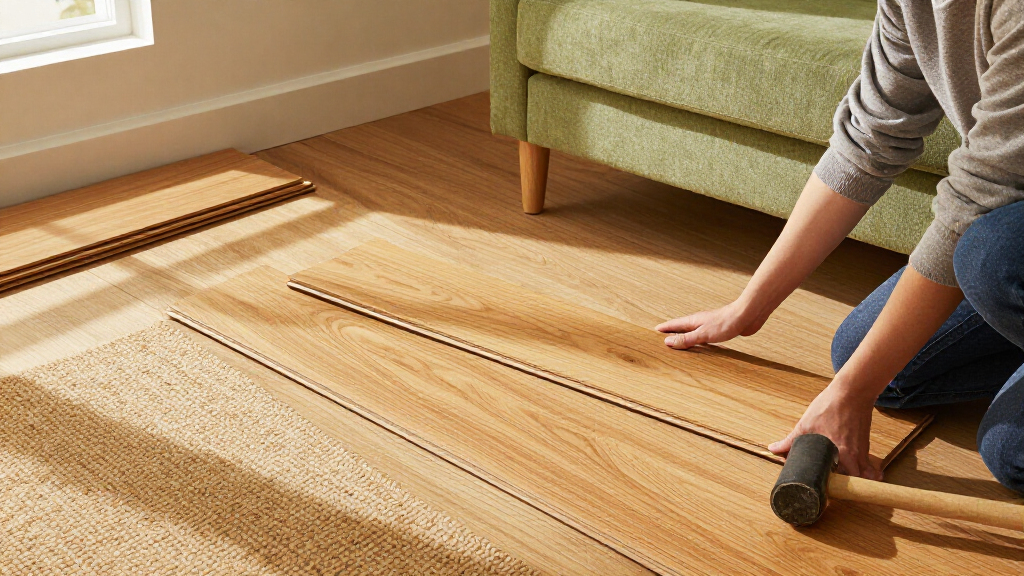
I compared the nine listings by the details that shape a flooring decision: wood species and appearance, plank width, finish description, stated construction, package coverage, and how clearly the listing identifies the product. Those details affect the visual scale of a room, the amount of finish information a buyer can verify, and the ease of planning a purchase. I gave more weight to options with recognizable specifications and a distinct design role, while treating sparse or potentially overlapping listings more cautiously.
The ranking puts Shaw Exploration Oak first because its wire-brushed finish and wider format make its intended look easy to understand. Shaw Empire Oak follows for buyers who want the same broad family of textured oak flooring in a narrower plank. The Rosewood oak listings, Ginlodda, Bruce, and Jeedeson serve more specific appearance or format needs, but the available listing information leaves more unanswered questions about construction, finish durability, or installation. I do not treat similar product names as proof that listings are identical, and I recommend confirming technical details with the seller before ordering.
| engineered wood flooring | Installation | Plank lengths |
|---|---|---|
| European Oak Engineered Hardwo | Nail-down or glue-down | — |
| Shaw Exploration Oak Wire-Brus | — | Random lengths from 10 to 58 9/16 inches |
| Shaw Empire Oak Wire-Brushed E | Nail, staple, glue-down, or floating; floating requires glued joints | Random lengths from 15-3/4 to 70-13/16 inches |
| Shaw SW583 Empire Oak 5" Wide | Floating, glue-down, nail-down, or staple-down | Random lengths; listed range 15-3/4 to 70-13/167 inches |
| Shaw SW713 Exploration Oak Wir | — | Random lengths from 10 to 58 9/16 inches |
| Ginlodda Multi-Ply Engineered | — | — |
| Bruce Natural Statement Engine | Click-lock; no glue or nails required | — |
| HomeStock European Oak Enginee | Nailing or gluing | Random |
| Jeedeson Engineered Hardwood F | — | — |
Factors to Consider When Choosing Best Engineered Wood Flooring
Product names and plank dimensions help narrow the field, but they do not settle whether a floor suits your home. I would verify the construction, installation requirements, and room conditions before choosing a finish or ordering cases.
Match Plank Width to Room Scale
Plank width changes how busy or open a floor feels, even when the species and finish are similar. Wider boards can create fewer visible seams across a room, while narrower boards often read as more traditional and may suit smaller spaces. Do not choose wide planks solely because they are prominent in product photos; check the room dimensions and account for the direction boards will run. Sample boards can look different from a full floor, so view them in the room’s daylight and evening lighting. Also confirm whether the listed width refers to the board itself or a nominal measurement. A width that looks calm in a large open area may dominate a compact room.
Verify the Wear Layer and Core
“Engineered” describes a layered wood product, but it does not tell you how thick the real-wood wear layer is or how the core is built. Ask for the wear-layer measurement, total thickness, core material, and manufacturer guidance on refinishing before buying. These details affect how the floor may handle wear and what repair options remain later. A multi-ply label, like the one in the Ginlodda listing, is useful information but not a substitute for the full specification. Avoid comparing products on total thickness alone, since two boards of similar thickness can have different surface layers. If the seller cannot supply these details, treat that uncertainty as part of the purchase decision.
Check Finish Claims Against Your Household
Wire brushing adds visible texture, which can soften the appearance of small marks, but it does not make wood immune to scratches or dents. A scuff-resistant finish claim, such as the one attached to a Shaw Empire listing, is worth verifying against the manufacturer’s care and warranty documents. Homes with pets, rolling chairs, or frequent grit at entryways need realistic expectations about surface wear. Ask which cleaning products are permitted; harsh cleaners can damage finishes even when the floor is otherwise well made. Keep a small amount of matching material if future board replacement is a possibility. For any finish, rugs with safe backings and felt pads can reduce avoidable abrasion.
Confirm Installation Method and Subfloor Fit
Do not assume every engineered floor can be installed the same way. Check whether the product is approved for floating, glue-down, or nail-down installation, and match that method to the subfloor and installer’s plan. Subfloor flatness, moisture limits, and underlayment requirements can affect both labor and the finished result. Ask whether the product is suitable for the specific level of the home and room conditions, especially where moisture may vary. A product page that lists dimensions but omits installation guidance is not enough to make this call. Get the installation instructions before purchase so you can catch incompatibilities before the flooring arrives.
Calculate Coverage, Waste, and Lot Consistency
Use the stated case coverage to estimate how many packages the project needs, then add a waste allowance based on room shape, board pattern, and installer advice. The Bruce listing specifies 22 square feet per case, while the Rosewood listings state 26.24 square feet; those differences affect ordering and leftover planning. Do not round down to avoid spare material, since cuts and damaged boards can leave a shortfall. Check whether all cases come from the same production lot, because color and grain can vary between batches. For multi-room projects, decide whether the flooring will continue through doorways before calculating quantities. Keep a few unused boards after installation for later repairs.
Read Warranty and Care Terms Before Choosing
A floor’s practical value depends on more than its appearance: warranty coverage, maintenance rules, and exclusions matter too. Read the warranty for restrictions involving moisture, installation, cleaning products, and use in particular rooms. Ask whether the warranty covers the finish, the board’s structural integrity, or both, since those are different protections. A broad product label cannot replace written terms tied to the exact SKU. Compare care instructions before committing if you want a low-maintenance routine or plan to use the floor in a busy household. If documents are unavailable on the product page, request them from the seller before placing an order.
Frequently Asked Questions
Are the two Shaw Exploration Oak listings necessarily the same flooring?
The names and stated 6-3/8-inch width are very similar, but that alone does not confirm that the listings refer to the exact same SKU or specification. Compare the model number, finish details, board thickness, wear-layer information, and package coverage. Confirm the installation method and warranty for the specific listing you plan to order. If those details differ, treat the products as separate until the manufacturer or seller confirms otherwise. This check can prevent ordering samples or cases that do not match your intended floor.
How should I choose between Shaw Exploration Oak and Shaw Empire Oak?
Start with the look you want: Exploration Oak is listed at 6-3/8 inches wide, while Empire Oak is listed as five-inch planks. The wider format tends to show fewer seams across a given area, whereas the narrower option gives the floor a more traditional visual rhythm. Both listings describe a wire-brushed look, so plank width and the exact finish color may be the clearest visible distinction. Compare the full technical sheets as well, since the shared Shaw name does not prove identical construction or finish protection. If possible, view samples side by side in the room where the floor will go.
Can I compare the two Rosewood European oak listings as interchangeable?
Not from their names alone. Both listings identify European oak and a Rosewood finish, and both state 26.24 square feet of coverage, but the listing information does not establish that they share a SKU, board construction, or finish specification. Check plank dimensions, thickness, wear layer, installation instructions, and package contents before treating them as substitutes. If you are extending an existing floor, matching the exact product and production lot matters more than matching a broad color name. Request written confirmation from the seller when product identity remains unclear.
What should I confirm before ordering the Jeedeson flooring with ten planks?
The listing gives board dimensions and a count of ten planks, but buyers also need the total coverage per package and the product’s construction details. Ask for wear-layer thickness, core type, finish, installation method, and care instructions. Confirm whether the listed dimensions are exact and whether the package is intended for a specific installation system. Without coverage information, it is difficult to calculate the number of packages accurately. Request a sample and written specifications before planning a full-room order.
Which option is the safest choice for a first-time flooring buyer?
I would start with the Shaw listing whose product identity and technical documentation are clearest, rather than choosing by appearance alone. In this roundup, Exploration Oak has a defined width and wire-brushed finish, but a beginner should still confirm its installation method, warranty, and wear-layer details. Ask the seller or installer to check subfloor conditions and calculate case quantities, including waste. A sample helps reveal color and texture differences that photos may hide. If the essential specifications remain unavailable, choose a listing with clearer documentation even if its style is less distinctive.
Conclusion
For the strongest all-around match of recognizable style and clear plank dimensions, I recommend Shaw Exploration Oak as the best overall pick, subject to confirming its technical sheet and exact listing identity. Best value is harder to assign from the available product details alone, so I would compare complete specifications and package coverage rather than infer value from the name. For a more refined or design-led choice, consider the Rosewood European oak options as a premium-style direction, but verify whether the two listings differ before ordering. Shaw Empire Oak is my best starting point for beginners who prefer a familiar five-inch plank format, provided the seller supplies installation and care documents. For specific needs, choose Bruce Natural Statement Maple for narrow natural-maple boards or Ginlodda Sandy Oak for a wider-plank look. In every case, confirm wear layer, installation compatibility, warranty, and case coverage before committing to a full order.