TL;DR

Get furniture and decor delivered free — and shop member deals
- Fast, free delivery on millions of items
- Access to Prime Big Deal Days deals on October 6–7
- Prime Video, Amazon Music and more included
Luxury velvet accent chairs bring color, texture, and a light-catching focal point to a room, but the best choice depends on more than appearance. Match the fiber and cleaning needs to your household, check the chair’s construction and comfort, and measure both its footprint and its route into the room before buying.
Choose velvet by fiber and care needs: synthetic and blended fabrics often suit busier rooms better than delicate silk velvet.
Check the chair’s frame, support, cushion, seat depth, and back before buying; upholstery alone does not predict comfort or durability.
Measure the floor space, clearances, and delivery route, then compare the chair’s seat height with nearby furniture.
View a swatch in your own room because velvet’s pile and changing light can shift how its color looks.
Vacuum gently, blot spills, and follow the manufacturer’s cleaning directions; some fabrics need professional care.
What makes velvet look so rich as the light shifts?
Luxury velvet accent chairs stand out because their short, dense pile catches light in different directions, creating soft changes in shade as you move around the room. The fabric adds a smooth, tactile surface and a distinct patch of color, so even a compact chair can become a focal point. At noon, a teal seat near a window may look bright; by lamplight, the same pile can appear darker and more subdued. That shifting surface rewards a closer look. Run your hand over a swatch and the pile changes direction; brush it back and the shade changes with it. A deep jewel tone often looks especially saturated in velvet, while cream and pale gray show everyday marks more readily. Ask for a sample if you can, then check it beside your rug and sofa in morning and evening light.Which velvet fiber suits your household best?
The right velvet fiber depends on how often you’ll use the chair and how much care you’re willing to give it. Cotton velvet tends to have a soft, matte finish but may show wear sooner; polyester and blended velvets are often easier to maintain and may resist stains better. Silk velvet feels delicate and usually suits a lower-traffic corner more than a family room. | Fabric | Look and feel | Best fit | |—|—|—| | Cotton velvet | Soft, often more matte | A room with moderate use and careful upkeep | | Polyester or blend | Often practical and easier to clean | Busy living spaces, subject to the fabric’s care label | | Silk velvet | Delicate, refined surface | Low-traffic rooms where appearance takes priority | The tradeoff is between the surface you want and the care that surface demands. A household with a dog that naps beside the fireplace might prefer a performance or synthetic velvet because easier cleaning can make regular use less stressful. That practicality does not mean the chair is claw-proof, and synthetic fabrics can still show pressure marks or wear. A rarely used bedroom chair can make room for silk’s delicate finish because it faces fewer spills and less friction. Before deciding, check the maker’s cleaning directions and any stated performance or abrasion rating; those details help you judge whether a fabric’s advantages match the conditions it will actually face.How can you tell whether a beautiful chair will last?
A well-made velvet chair pairs upholstery you like with a sound frame, secure joinery, supportive suspension, and cushions suited to regular use. These parts work together: the frame carries the load, the suspension supports the seat, and the cushion affects both comfort and how the chair holds its shape. If one is weak, attractive upholstery cannot compensate. You can’t judge those parts from the fabric alone, so ask what the frame is made from, how the seat is supported, and whether the upholstery seams feel neat and even. A low price or a plush showroom cushion does not tell you how the chair will feel after months of use. Imagine you want a chair for a nightly reading habit. A sculptural seat with a shallow cushion may look striking, but a deeper seat, supportive back, and arms at a comfortable height may serve you better for an hour with a book. That comfort involves a tradeoff: a deep seat can feel relaxed but may be awkward for someone with shorter legs, while a firmer cushion may offer more support but feel less sink-in soft. If possible, sit in the chair before ordering; online, compare the seat height and depth with a chair you already find comfortable. Check the warranty and return terms while you’re looking at construction, since they affect how much recourse you have if the chair does not perform as expected.How do you choose a chair that fits both your room and your routine?
Use this buying checklist to match the chair to the space, the way you’ll use it, and the route it must take into your home. A chair that fits on a floor plan can still block a walkway or fail to pass through a narrow doorway. Its footprint also changes how the room feels: a bulky chair can make a small seating area feel crowded, while one that is too small may look disconnected from a large sofa. Measure before you shop, then compare the listed dimensions with the room and the people who will use it.- Measure the intended spot and leave comfortable clearance for nearby walkways, doors, and tables.
- Measure entrance doors, hallways, and turns between the delivery point and the room.
- Decide whether you need occasional seating or a chair for long reading sessions.
- Compare fabric composition, cleaning instructions, frame details, cushion construction, warranty, and return policy.
- Check a fabric swatch in the room’s lighting and beside existing furniture.
How can velvet make a room feel polished without feeling formal?
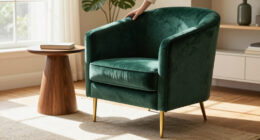
Balance velvet’s sheen with quieter textures and shapes that suit the room. A curved back or channel tufting can give a chair a sculptural presence, while pale wood, a natural-fiber rug, or matte metal legs soften the polished fabric. This balance matters because several shiny or ornate surfaces together can make a room feel more formal, while tactile matte materials give the eye places to rest. These details help a chair feel at home in more than one decorating style: clean lines can suit a contemporary room, while tufting or carved legs may lean traditional. A forest-green chair with catching fabric beside a pale oak table and a woven rug can feel welcoming rather than grand. A distinctive seat can also give a quiet corner purpose: add a reading lamp and small table, then keep the rest of the palette calm so the velvet has room to stand out. Think of the chair as one strong note in the room; repeating its color in a small cushion or artwork can connect the scheme without making every surface glossy.What keeps velvet looking good through everyday use?
Gentle, regular care and quick attention to spills help velvet stay presentable, but the fabric’s own instructions decide what you should do. Velvet’s pile can trap dust and change direction under pressure, so light vacuuming and careful handling help preserve an even surface. Vacuum lightly with an upholstery attachment to lift dust from the pile. If a spill happens, blot it with a clean cloth instead of rubbing, which can push liquid deeper or disturb the surface. A glass of water tipped beside the chair calls for a calm response: blot the damp area, then follow the maker’s directions before applying any cleaner. Rubbing may spread a mark and rough up the pile, so blotting limits disturbance while you remove moisture. Test an approved product on a hidden spot first. Some velvet may benefit from gentle brushing or steaming, but only if the care label permits it; heat or moisture can damage some fibers or backing. A fabric that requires professional cleaning needs professional attention. For homes with children or pets, ask the seller about specific cleaning guidance rather than assuming every “performance” fabric handles every mess.Frequently Asked Questions
Is velvet practical for an accent chair?
It can be, especially if you match the fabric to the room’s level of use. Synthetic or performance velvet may be easier to maintain than delicate natural-fiber velvet, but check the specific care instructions and performance information.Do velvet chairs show wear or pressure marks?
The pile can flatten or show marks where people sit, and the effect varies by fabric and use. Gentle brushing may help; try steaming only if the manufacturer’s care instructions allow it.Can a velvet chair work in a home with pets or children?
Some synthetic or performance velvets may be more forgiving, but no upholstery is immune to claws, spills, or stains. Look up the fabric’s care guidance and performance details before choosing it for a busy room.How should I clean a velvet accent chair?
Follow the manufacturer’s cleaning instructions first. Vacuum gently with an upholstery attachment and blot spills instead of rubbing; test any approved cleaner on a hidden area, and call a professional if the label requires it.Are velvet accent chairs comfortable for reading?
They can be, but fabric does not determine comfort. Check the seat height and depth, back support, arm shape, and cushion firmness, and try the chair or compare its measurements with a seat you already like.Conclusion
Choose a velvet accent chair for the way you’ll actually use it: test its proportions, check its construction, and view its fabric where it will live. When the chair fits your room and your routine, that soft sweep of color can make an ordinary corner feel like your favorite seat in the house.Fall Picks
fall essentials
As an affiliate, we earn on qualifying purchases.