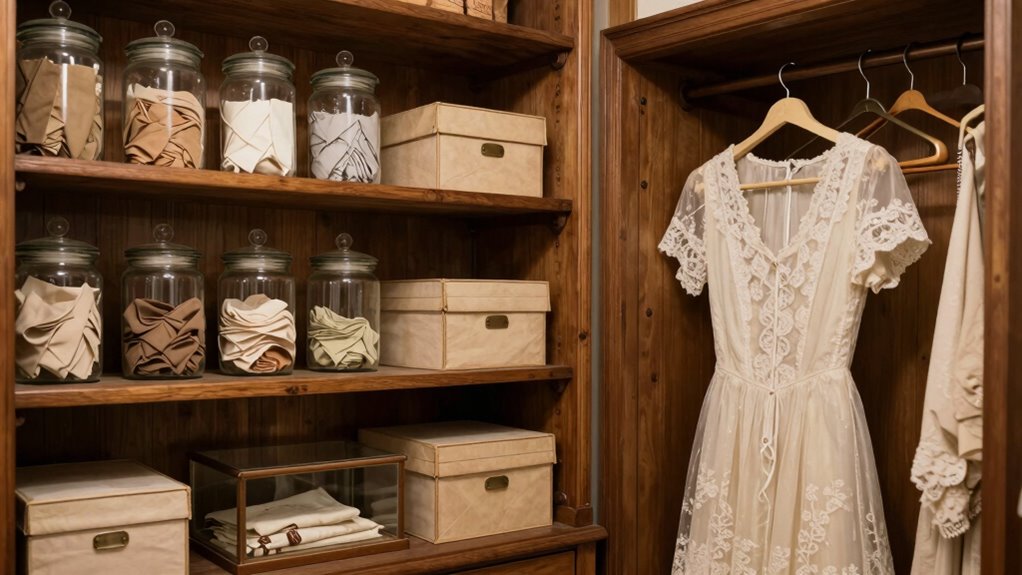

Your dressing room storage isn’t just about organization; it’s key to preserving your clothes’ quality and lifespan. Proper storage prevents damage from wrinkles, stretching, or fabric pulls. Controlling humidity, temperature, and light protects fabrics from mold, fading, and deterioration. Using the right hangers and storage containers maintains garment shape and prevents wear. When you pay attention to storage details, you help keep your wardrobe beautiful and functional for years to come—discover how to optimize your space further.
Key Takeaways
- Proper storage prevents fabric damage, wrinkles, and deformation, extending clothing lifespan.
- Controlled environmental conditions minimize mold, mildew, and color fading, preserving garment quality.
- Using appropriate hangers and folding techniques maintains garment shape and prevents stress.
- Organized storage reduces clutter, making it easier to inspect and address potential damage early.
- Tailored storage solutions protect delicate fabrics from snags, pulls, and pests over time.
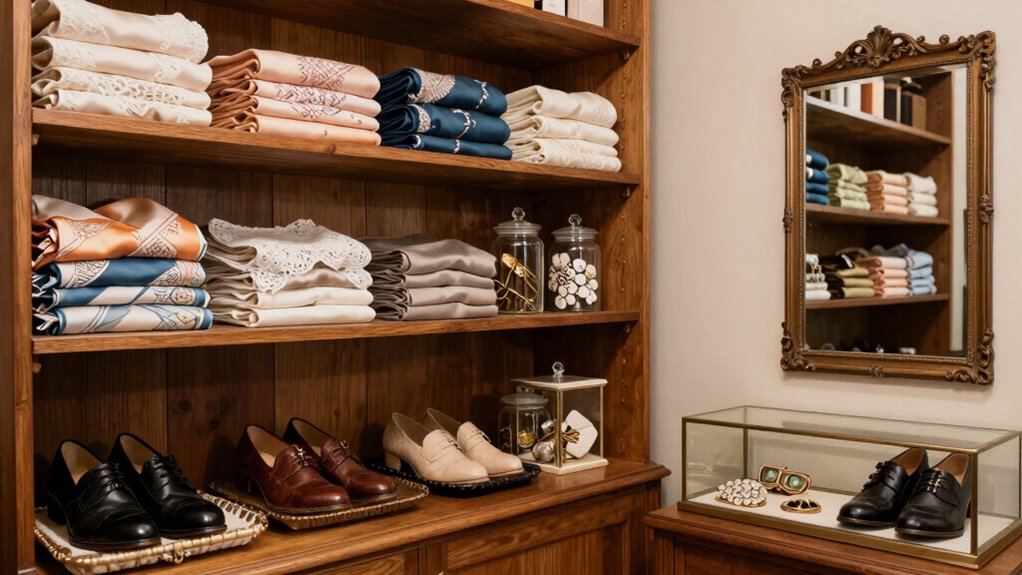
Keeping your dressing room organized and your storage preserved isn’t just about aesthetics—it’s about maintaining the longevity of your clothing and accessories. Proper clothing organization plays an essential role in preventing damage and ensuring your wardrobe stays in top shape over time. When you organize your clothing thoughtfully, you reduce the risk of wrinkles, fabric pulls, and unnecessary wear. Instead of tossing everything together, you assign designated spaces for different items, which helps you handle each piece with care and minimizes clutter that can cause fabric stress.
Organized wardrobes protect clothing from damage and keep your space stylish and functional.
Fabric maintenance is also a key part of preserving your wardrobe. Different materials require specific handling, and understanding how to care for delicate fabrics like silk, wool, or linen can keep your clothes looking new longer. For example, storing silk blouses properly—folded gently or hung on padded hangers—prevents snags and creases. Wool sweaters benefit from being folded neatly rather than hung, which prevents stretching and misshaping. When your storage system considers fabric needs, you’re actively extending the lifespan of your garments. This isn’t just about keeping things tidy; it’s about preventing deterioration caused by improper storage, exposure to sunlight, or humidity. Additionally, understanding fabric care can help you select the appropriate cleaning methods, further prolonging the life of your clothing.
A well-maintained dressing room also involves controlling environmental factors that affect your clothing. Humidity and temperature fluctuations can lead to mold, mildew, or fabric weakening. Using breathable storage solutions like cotton bins or garment bags helps maintain airflow and protect your clothes from dust and pests. Regularly inspecting your wardrobe for signs of damage or pests allows you to catch issues early before they become costly repairs or replacements. Proper airflow and humidity control are essential parts of fabric maintenance, and they directly influence how long your clothes stay in good condition. Understanding fabric care is crucial in maintaining the quality and durability of your wardrobe over time. Incorporating climate control measures, such as dehumidifiers or climate-controlled closets, can further safeguard your clothing investments. Additionally, paying attention to storage environment conditions, like avoiding direct sunlight, helps preserve fabric colors and textures over time.
In addition, thoughtful storage practices can help you avoid unnecessary washing and dry cleaning, which can wear fabrics down over time. Folding or hanging clothes properly prevents stretching, shrinking, and fabric pilling. Using the right hangers—like padded or wooden ones—also reduces stress on the fabric and maintains the garment’s shape. When your dressing room setup considers both organization and fabric care, you’re actively preserving each piece’s original quality. Ultimately, a well-organized, thoughtfully maintained dressing room isn’t just visually pleasing; it’s a strategic investment in the longevity of your wardrobe, ensuring your clothing remains beautiful, functional, and wearable for years to come.
clothing storage bins breathable cotton
As an affiliate, we earn on qualifying purchases.
As an affiliate, we earn on qualifying purchases.
Frequently Asked Questions
How Does Storage Affect the Longevity of Delicate Fabrics?
You can extend the life of delicate fabrics by managing storage conditions carefully. Humidity control prevents mold and mildew, which can damage fibers over time. Pest prevention keeps insects like moths away, protecting your garments from holes and stains. By ensuring your storage area is dry, clean, and pest-free, you help preserve the fabric’s integrity, color, and texture, allowing your delicate pieces to stay beautiful and wearable for years.
What Are the Best Materials for Preserving Vintage Clothing?
Think of your vintage clothing as delicate flowers needing gentle care. Use natural fibers like cotton, linen, and silk for storage because they offer excellent fabric breathability, preventing moisture buildup. Acid-free tissue paper and storage boxes protect against pests and moths, keeping your treasures safe. Avoid plastics that trap humidity. With these materials and techniques, you preserve your vintage pieces beautifully, ensuring they stay vibrant and intact for generations to come.
Can Improper Storage Cause Color Fading Over Time?
Improper storage can definitely cause color fading over time. When you neglect proper storage techniques, exposure to light, heat, and humidity accelerates color loss. To protect your vintage clothing, focus on color preservation by keeping items in a cool, dark, and dry environment. Use breathable storage materials and avoid plastic containers that trap moisture. These storage techniques help maintain vibrant colors and prolong the life of your cherished pieces.
How Often Should Storage Conditions Be Checked for Preservation?
You should check storage conditions at least quarterly, but don’t let your vigilance slip—unexpected issues can arise anytime. Regular checks guarantee temperature control stays steady and pest management remains effective, both essential for preservation. During these inspections, look for signs of damage, humidity shifts, or pests. Staying proactive helps protect your items from deterioration, and catching problems early keeps your collection safe and preserved for years to come.
Are There Environmentally Friendly Options for Dressing Room Storage?
Yes, there are eco-friendly options for dressing room storage. You can choose sustainable storage solutions made from eco-friendly materials like bamboo, reclaimed wood, or recycled plastics. These options help reduce environmental impact while keeping your space organized. By selecting sustainable storage, you support eco-conscious practices and guarantee your dressing room remains environmentally friendly. It’s a simple way to combine functionality with sustainability, making your space both practical and eco-aware.
Conclusion
Think of your dressing room as a treasure chest—every item a gem that deserves protection. Proper storage isn’t just about keeping things tidy; it’s about preserving your wardrobe’s magic for generations to come. Neglecting this task could turn your beloved collection into a chaotic disaster zone—an unthinkable catastrophe! So, take charge, organize diligently, and treat your dressing room like the precious sanctuary it truly is. Your clothes will thank you with a lifetime of style and charm!