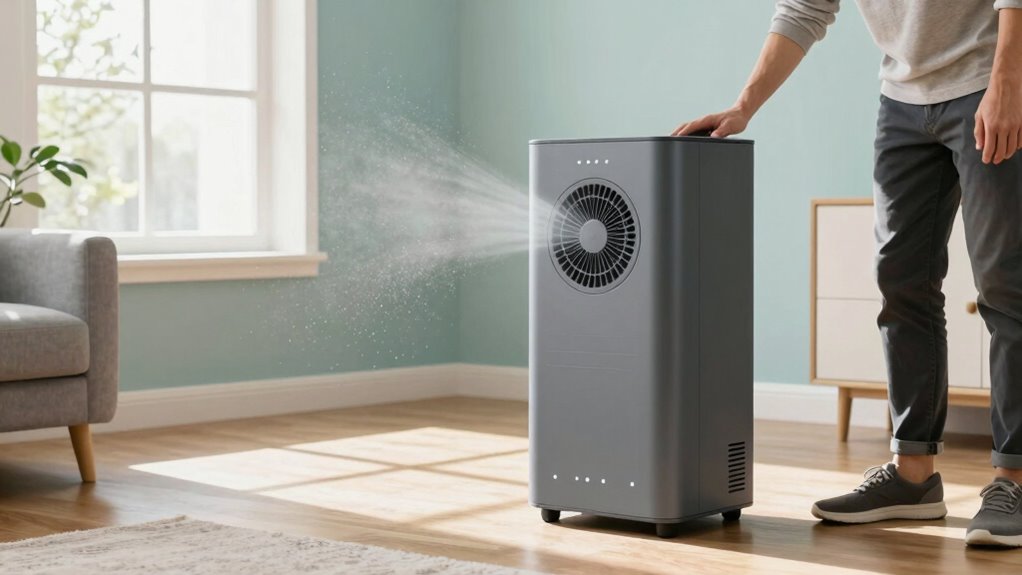

An air scrubber is great for cleaning the air after renovation because it removes dust, fumes, mold spores, and airborne pollutants quickly and effectively. It helps improve indoor air quality, making your space safer and more comfortable. Plus, it reduces lingering odors and captures allergens that can cause allergic reactions. If you want to understand how these units work and choose the best one for your needs, there’s more to discover below.
Key Takeaways
- Removes dust, debris, and airborne pollutants to improve indoor air quality post-renovation.
- Eliminates lingering odors from paint, fumes, and building materials.
- Captures allergens, mold spores, and chemical fumes for a safer environment.
- Supports HVAC efficiency by filtering pollutants before circulation.
- Ensures a healthier, cleaner indoor space for occupants after construction work.

After a renovation, using an air scrubber can markedly improve indoor air quality by removing dust, debris, and airborne contaminants. Renovation projects stir up a lot of particles—sawdust, drywall dust, paint fumes—that settle into the air and pose health risks. An air scrubber acts as a powerful filter, capturing these pollutants before they circulate through your HVAC system or settle on surfaces. This is especially beneficial if you want to avoid lingering odors or allergic reactions caused by residual dust.
Post-renovation, an air scrubber effectively removes dust, debris, and airborne contaminants for cleaner indoor air.
When choosing an air scrubber, it’s essential to consider HVAC compatibility. Not all units work seamlessly with your existing heating, ventilation, and air conditioning system. Some air scrubbers are standalone units, while others integrate directly into your HVAC ductwork. If you opt for a unit that connects to your system, ensure it’s compatible to avoid any airflow disruptions or system malfunctions. Proper compatibility guarantees the scrubber functions efficiently without overloading your HVAC, which could lead to increased energy consumption or system damage. Additionally, compatibility ensures your entire space benefits from cleaner air, as the system can circulate and filter air more effectively.
Using the right air scrubber minimizes post-renovation cleanup and health risks. It helps eliminate lingering dust, mold spores, and chemical fumes, making your environment safer and more comfortable. Selecting a unit that is designed with air quality standards in mind can further enhance its effectiveness. The key is selecting a unit that’s compatible with your HVAC system for ideal airflow and filtration, and that operates quietly to avoid disturbing your daily activities. Lower noise levels make it easier to run the unit continuously without disruption, ensuring your air remains clean without adding stress or irritation. Additionally, choosing a unit with advanced filtration technology can significantly improve its ability to trap smaller particles and pollutants. Incorporating proper maintenance practices can also prolong the effectiveness of your air scrubber and maintain optimal air quality over time.
A high-quality air scrubber can also help reduce indoor air pollution, which is vital for maintaining a healthy indoor environment, especially after extensive renovations.

CADPXS Shield-550 Air Scrubber 550 CFM with 3-Stage Filtration, Negative Air Machine, Airborne Cleaner HEPA Scrubber, Water Damage Restoration Equipment, Commercial Air Purifier
- Whole-Home HEPA Air Purifier: Removes airborne particles and debris
- Heavy-Duty Commercial Use: Suitable for renovation and restoration projects
- Pre-Filter for Larger Particles: Protects HEPA filter from large debris
As an affiliate, we earn on qualifying purchases.
As an affiliate, we earn on qualifying purchases.
Frequently Asked Questions
How Long Should I Run an Air Scrubber Post-Renovation?
You should run an air scrubber for at least 24 to 48 hours post-renovation, depending on the project’s size and dust levels. It helps improve air quality by removing airborne particles and contaminants. Use effective ventilation strategies, such as opening windows and increasing airflow, alongside the scrubber. Continue running it until dust and odors are noticeably reduced, ensuring your indoor air is safe and clean before resuming normal activities.
Can an Air Scrubber Remove All Types of Renovation Dust?
An air scrubber effectively improves air quality by removing most types of renovation dust, including fine particles and allergens. While it substantially reduces dust and airborne contaminants, it may not eliminate every microscopic particle completely. For ideal dust removal, run the air scrubber continuously during and after renovations. This keeps the air cleaner, protecting your health and making your space safer and more comfortable during the cleanup process.
Are Air Scrubbers Effective Against Chemical Fumes From Paints?
Yes, air scrubbers are effective against chemical fumes from paints. They help with VOC removal by filtering out airborne chemicals, reducing harmful fumes in your space. When you run an air scrubber during and after painting, it actively captures chemical particles, improving air quality quickly. This makes your environment safer and more comfortable, especially if you’re sensitive to fumes or have respiratory concerns.
Do I Need a Professional to Operate an Air Scrubber?
Think of operating an air scrubber like tuning a finely crafted instrument—you want to get it just right. You don’t always need a pro, especially with DIY air purification options. Most air scrubber types are user-friendly, with clear instructions. However, if your space is large or complex, consulting a professional guarantees best results. With a little care, you can efficiently improve your air quality without professional help.
How Often Should I Replace or Maintain the Filters?
You should replace or maintain your air scrubber filters based on the filter lifespan, which typically ranges from every 3 to 6 months, depending on usage and air quality. Check your manufacturer’s recommendations for maintenance frequency, and inspect filters regularly for dirt buildup or damage. If you notice reduced airflow or persistent odors, it’s time to clean or replace the filters promptly to keep your air scrubber functioning effectively.
Conclusion
After renovation, an air scrubber isn’t just good—it’s like having a superhero in your home, battling dust, mold, and lingering odors with unstoppable power. It guarantees your indoor air is fresher than a mountain breeze, making your space healthier and more comfortable to enjoy. Don’t underestimate its might; it’s the ultimate cleanup champion that transforms chaos into calm in moments. Trust me, your lungs will thank you for bringing this mighty device into your home!