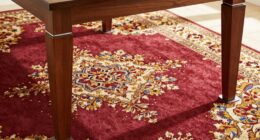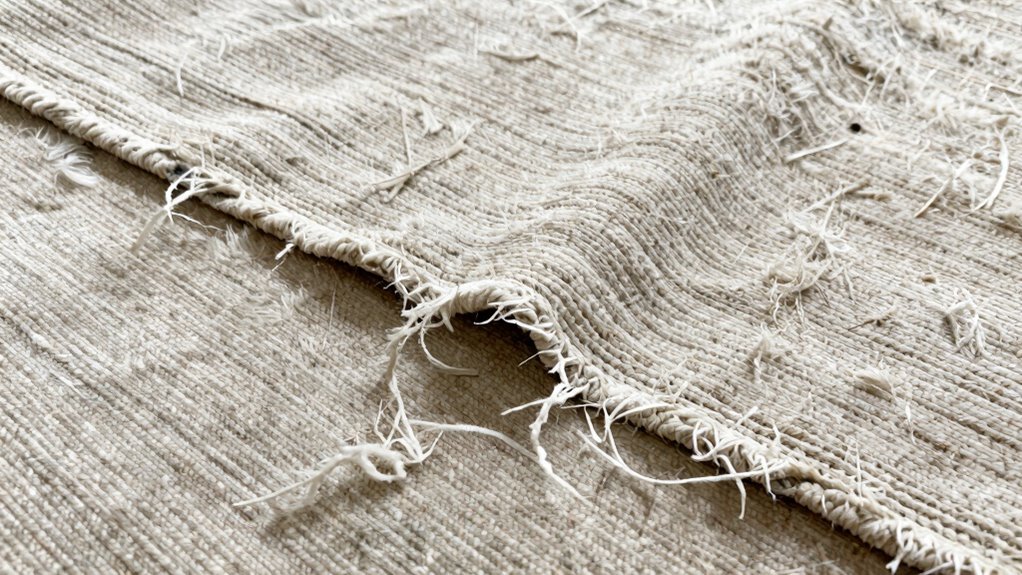
Beater bars can damage your rugs over time because their mechanical action weakens fibers, causing fraying, tearing, and uneven wear. Even expensive and antique rugs aren’t immune because their delicate fibers and intricate weaves are vulnerable to the aggressive agitation. If you keep using beater bars, you may unknowingly accelerate damage and diminish your rug’s beauty. To protect your investment, it’s essential to learn safer vacuuming techniques and proper maintenance, which we’ll explore next.
Key Takeaways
- Beater bars cause fiber wear, pulling, and fraying, damaging both delicate and durable rug fibers over time.
- Mechanical agitation from beater bars weakens fibers, leading to thinning, fraying, and structural deterioration.
- Even expensive rugs suffer from uneven dye fading and fiber damage due to aggressive or repeated beater bar use.
- Beater bars can loosen or pull fibers, causing tears or unraveling, especially in antique or delicately woven rugs.
- Proper cleaning avoiding beater bars helps preserve rug integrity, preventing damage to valuable and antique pieces.
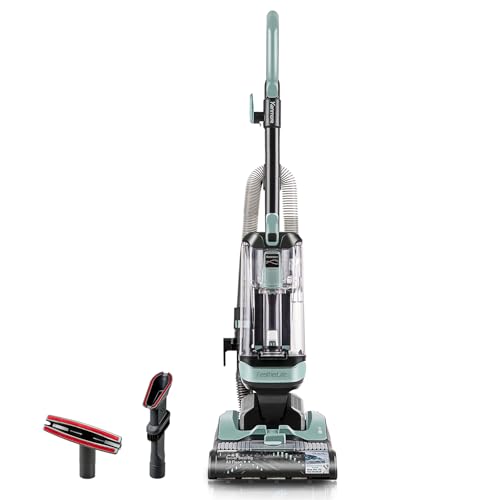
Kenmore DU1275 Bagless Upright Vacuum Lightweight Carpet Cleaner with 4 Height Adjustment, Hair Eliminator brushroll, Pet HandiMate & 2 Cleaning Tools, Light Green
- Dust Cup Capacity: 3X larger dust container
- Swivel Steering: Easy maneuver around furniture
- Lightweight Design: Under 11 pounds for portability
As an affiliate, we earn on qualifying purchases.
As an affiliate, we earn on qualifying purchases.
How Beater Bars Can Damage Your Rugs Over Time

Even though beater bars are designed to loosen dirt and debris, they can also cause significant damage to your rugs over time. Poor vacuum ergonomics often lead to excessive pressure or aggressive brushing, which can wear down rug fibers prematurely. When you neglect rug fiber analysis, you might not realize how delicate or resilient your rug’s material truly is. Beater bars can pull, tear, or fray fibers, especially if you’re using an aggressive setting or have a thick pile. Over repeated use, this damage accumulates, weakening the rug’s structure and appearance. To protect your investment, it’s vital to understand your rug’s fiber type and adjust your vacuuming technique accordingly, minimizing damage caused by the beater bar. Additionally, understanding rug fiber resilience can help you choose the appropriate vacuum settings and prevent unnecessary wear.
Signs Your Rug Is Suffering From Beater Bar Damage
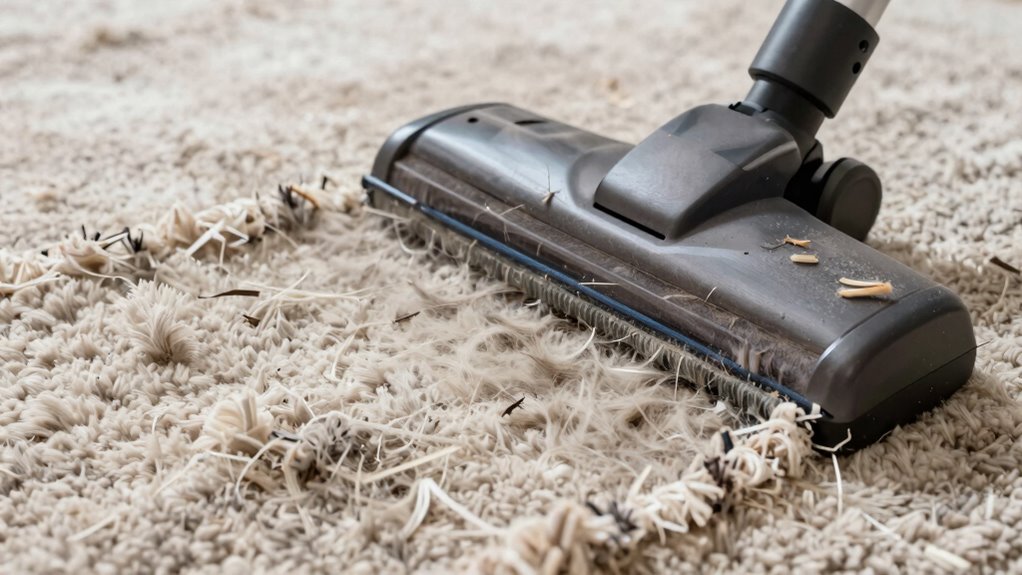
When your rug begins to show signs of wear, it may indicate that the beater bar has been causing damage over time. Look for rug fiber deterioration, such as frayed or thinning areas, especially in high-traffic spots. You might also notice color fading issues, where certain sections appear duller or lighter than others. These signs suggest the fibers are breaking down due to constant agitation from the beater bar. Additionally, if you see uneven wear or rough patches, it’s a clear indicator that the beater bar is harming your rug. Recognizing these symptoms early can help you take action before more severe damage occurs, preserving both the appearance and longevity of your rug. European cloud innovation and energy-efficient technologies play a role in developing safer vacuum components that minimize damage.
Why Even Luxury Rugs Are Not Immune to Vacuum Damage

Luxury rugs often boast delicate fibers and intricate weaves that make them appear resilient, but they’re still vulnerable to the damage caused by vacuuming. Their rug fiber sensitivity means that aggressive cleaning methods can weaken or fray fibers over time. Even high-end rugs aren’t immune to wear from regular vacuum use, especially if you use a beater bar or high vacuum noise levels that disturb the fibers. The agitation from powerful vacuums can cause fibers to loosen or pull, leading to permanent damage. You might think that expensive rugs can withstand anything, but their delicate construction requires gentle handling. To preserve their beauty, you need to understand how vacuuming impacts these fibers and adjust your approach accordingly. Color accuracy and proper cleaning techniques are essential in maintaining rug integrity over time.
Safer Vacuuming Tips to Protect Your Expensive Rugs
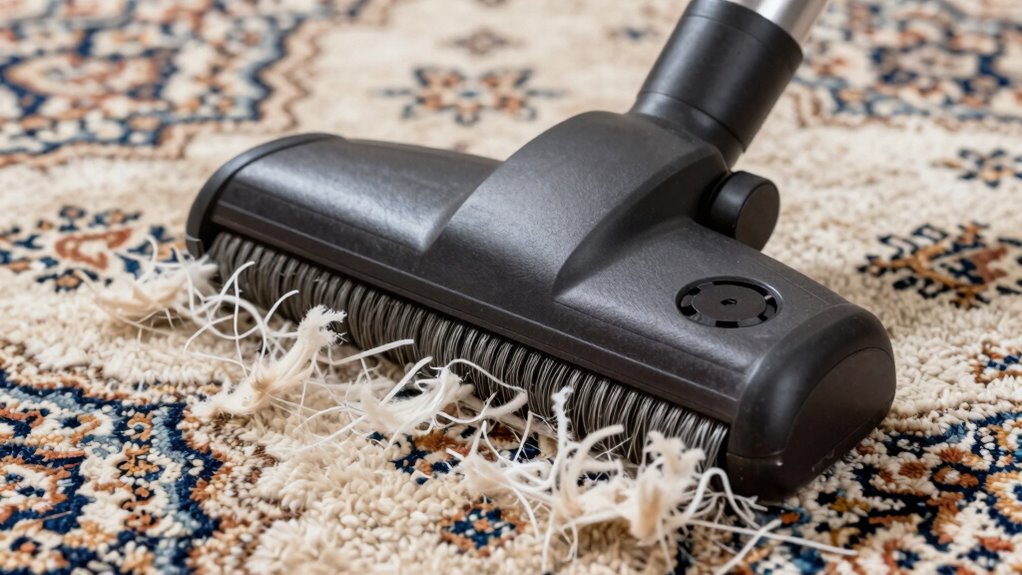
To protect your expensive rugs from vacuum damage, adopting safer cleaning techniques is key. Start by understanding your rug’s fiber types—they determine the best vacuum approach. Use a vacuum with adjustable height settings to prevent the beater bar from catching on delicate fibers. Additionally, ensure your rug has proper padding; thicker padding can cushion impact and reduce wear. Regularly change vacuum settings based on fiber type and pile height. Avoid aggressive passes, and consider using a handheld or suction-only attachment for extra care. Properly maintained, your rug’s longevity increases while damage risks decrease. Incorporating safe installation practices can also help minimize unnecessary stress on your rugs during cleaning.
How to Choose a Vacuum Without Beater Bars

Choosing a vacuum without a beater bar is vital for protecting delicate rugs and fibers. When selecting your vacuum, focus on models with adjustable suction settings to prevent damage. A good vacuum filter is indispensable, as it traps dust without relying on aggressive brushes that can harm fibers. Look for vacuums with a longer cord length to give you ample reach, reducing the need to constantly switch outlets and minimizing unnecessary wear. Avoid vacuums with rotating brushes or beater bars if you want to preserve your rug’s integrity. Instead, opt for lightweight, gentle models that easily glide over fragile surfaces. By paying attention to these features, you guarantee effective cleaning while safeguarding your rugs from unnecessary damage caused by harsh beater bars. Incorporating connected equipment and app-controlled features can also help you optimize your cleaning routines to protect sensitive fibers more effectively.
Proper Ways to Maintain Your Rugs’ Beauty and Longevity

To keep your rugs looking their best, you need to follow proper maintenance routines. Regular vacuuming, spot cleaning, and occasional professional care are key to preserving their beauty and lifespan. Let’s explore effective techniques to guarantee your rugs stay fresh and durable over time. Additionally, avoiding beater bars during vacuuming can prevent unnecessary damage to delicate fibers and prolong the life of your rugs.
Regular Vacuuming Techniques
Regular vacuuming is essential for keeping your rugs looking their best and extending their lifespan. To protect rug pile preservation, avoid aggressive techniques that can wear down fibers. Use gentle, slow passes with your vacuum to lift dirt without damaging delicate fibers. When choosing vacuum attachment options, opt for a brushless or upholstery tool instead of beater bars, which can pull or fray rug fibers. Adjust the height setting on your vacuum to prevent it from being too aggressive. Regularly empty the vacuum bag or canister to maintain suction power, ensuring thorough dirt removal. Additionally, proper maintenance practices help ensure your vacuum operates effectively without damaging your rugs. By adopting proper vacuuming techniques, you preserve the integrity of your rug’s fibers and maintain its beauty for years to come.
Proper Spot Cleaning Methods
Proper spot cleaning is essential for maintaining your rug’s appearance and extending its lifespan. To effectively remove pet hair, gently lift loose hairs with a vacuum attachment or a rubber glove, avoiding harsh brushing that could damage fibers. For stains or spills, act quickly by blotting the area with a clean, damp cloth—don’t rub, as this can spread the stain or embed it deeper. Use a mild detergent diluted with water for stubborn spots, and test it on a small hidden area first. Proper spot cleaning also helps control allergens like pet dander, dust, and dirt that settle into fibers over time. Regular, careful attention prevents buildup and preserves the rug’s beauty, making it look fresh and inviting for years. Additionally, understanding the human-centered approach to rug care ensures that cleaning methods are gentle and effective, safeguarding the integrity of your valuable pieces.
Professional Maintenance Tips
Maintaining your rug’s beauty and longevity requires consistent professional care, which helps prevent damage that can occur over time. One key tip is to use a vacuum brush carefully, avoiding aggressive agitation that can fray or loosen rug fibers. Regular vacuuming removes dirt and debris that can embed deep into the fibers, preventing premature wear. When vacuuming, use gentle, even strokes and adjust the height setting to prevent unnecessary strain on delicate rug fibers. Avoid using beater bars or rotating brushes on high-pile or fragile rugs, as they can cause fiber breakage. Instead, opt for a vacuum with a soft brush attachment or a suction-only setting. Proper maintenance preserves your rug’s appearance and extends its lifespan, keeping it looking beautiful for years. Additionally, understanding power tools and equipment can help you perform routine cleaning or minor repairs safely and effectively, further prolonging your rug’s life.
What to Do If Your Rug Is Already Damaged
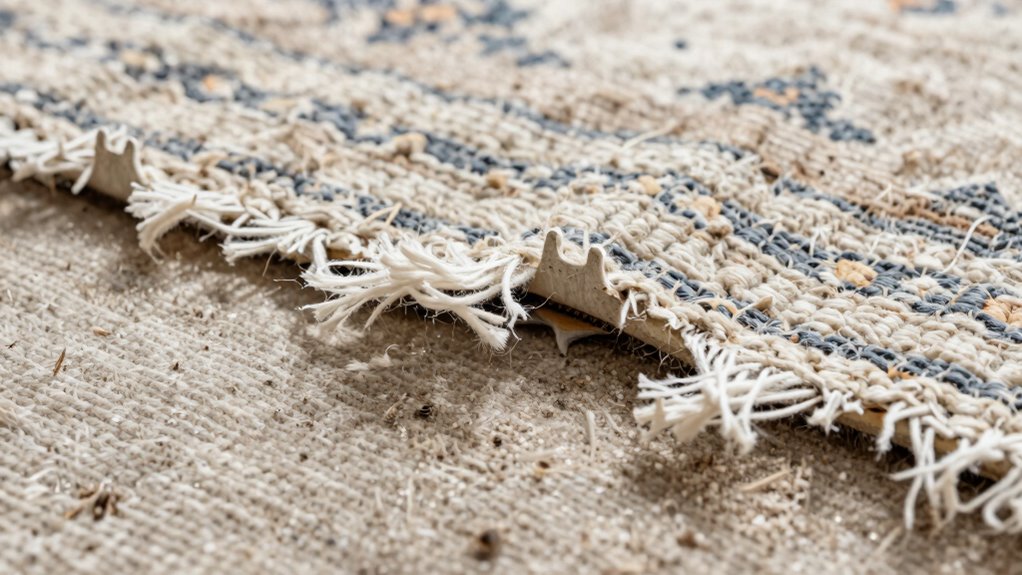
If your rug is already damaged, start by carefully evaluating the extent of the harm to determine the best next steps. You might want to contemplate professional repair to restore its appearance and value. To prevent further damage, review your cleaning methods and avoid using beater bars or harsh equipment in the future. Additionally, understanding how rug construction influences durability can help you choose more resilient options moving forward.
Assess Damage Carefully
Before attempting any repairs or cleaning, take a close look at your rug to assess the damage. Check for signs of fiber fragility, which can cause fibers to fray or break easily, and note any areas where dye fading has occurred. Understanding the extent of damage helps determine whether the rug can be salvaged or needs professional attention. Be gentle when inspecting, avoiding further stress to fragile fibers. If you notice significant fiber fragility or uneven dye fading, resist the urge to scrub or use harsh chemicals, as this can worsen the damage. Document the affected areas with photos, so you have a clear record if professional repair becomes necessary. Careful assessment now prevents additional harm and guides your next steps effectively.
Consider Professional Repair
When you notice significant damage to your rug, seeking professional repair can be the safest option. A professional can assess the extent of the damage caused by vacuum suction or beater bars and determine if repairs are feasible. They might:
- Reweave or patch torn rug fibers, restoring the original appearance.
- Reinforce frayed edges to prevent further unraveling.
- Clean and stabilize the rug, removing dirt trapped within damaged fibers.
- Use specialized tools to gently lift or reshape flattened areas caused by excessive vacuuming.
These experts understand how to handle delicate fibers and can prevent further harm. Professional repair ensures your rug retains its beauty and longevity, especially if it’s an expensive or antique piece. It’s a smart choice when damage is already evident.
Prevent Future Harm
Once your rug has sustained damage, taking immediate steps can prevent it from worsening. First, avoid using high vacuum suction that could further pull at fragile rug fibers. Switch to a gentle, low-suction setting to reduce the risk of rug fiber damage during cleaning. Regularly check your vacuum’s beater bar or rotating brush, and disable or turn it off if possible. Use a vacuum attachment or a hand-held vacuum for delicate areas to prevent unnecessary stress on the fibers. Additionally, consider placing rugs in low-traffic areas or using protective pads to minimize future wear. Keeping your rug clean without aggressive vacuuming preserves its integrity and prolongs its lifespan, helping you avoid costly repairs or replacements down the line.
Frequently Asked Questions
Can Beater Bars Damage Delicate Rug Fibers?
Yes, beater bars can damage delicate rug fibers if you’re not careful. You might notice harm if your rug has high fiber sensitivity or if you use the wrong vacuum settings. To protect your rug, adjust the vacuum to a gentle setting and avoid using the beater bar on fragile fibers. This prevents unnecessary wear and keeps your rug looking its best while avoiding damage.
Are There Specific Vacuum Models Better for Rugs?
Are there vacuum models better for rugs? Absolutely. You should look for models with adjustable height settings and gentle brush rolls to safeguard your rug fibers. Check consumer reviews for insights on vacuum longevity and performance on delicate surfaces. Why settle for less when some brands excel at cleaning without damage? Investing in the right vacuum not only preserves your rugs but also ensures efficient, safe cleaning every time.
How Often Should I Inspect My Rug for Damage?
You should inspect your rug for damage at least once a month as part of your regular vacuum maintenance. During your rug inspection schedule, look for signs of wear, fraying, or loosened fibers that could be caused by beater bars. Regularly checking helps you catch issues early and prevents further damage. Keep your vacuum’s beater bar height adjusted properly to avoid unnecessary wear, ensuring your rug stays in good condition longer.
Do Rug Materials Influence Susceptibility to Beater Bar Damage?
You bet your bottom dollar that rug materials affect their vulnerability to beater bar damage. Wool and plush rugs tend to be more delicate, especially with vibrant colors that reveal wear quickly. Rug size impacts how much exposure your rug gets—larger rugs might face more frequent encounters with the beater bar. So, choose materials wisely and consider rug color considerations to protect your investment from unnecessary harm.
Is Professional Cleaning Safer Than Vacuuming for Expensive Rugs?
Professional cleaning is generally safer than vacuuming for expensive rugs because it reduces the risk of damage from improper vacuum maintenance or using harsh beater bars. Regular vacuuming can wear down delicate fibers over time, leading to costly rug replacement. By opting for professional cleaning, you guarantee gentle, thorough care that preserves your rug’s beauty and longevity, avoiding unnecessary wear caused by aggressive vacuuming techniques.
Conclusion
To keep your rugs looking their best, think of your vacuum as a gentle hand, not a harsh storm. Avoid beater bars that can tear and fray, especially on expensive or delicate rugs. Regular, careful maintenance is like watering a plant—nurturing its beauty and longevity. With the right tools and techniques, you’ll protect your investment and enjoy a vibrant, lasting rug that feels as soft as a whisper under your feet.